
Beach Pebbles vs Crushed Rock: Which Fits Your Yard Better?
Two Very Different Kinds Of Stone
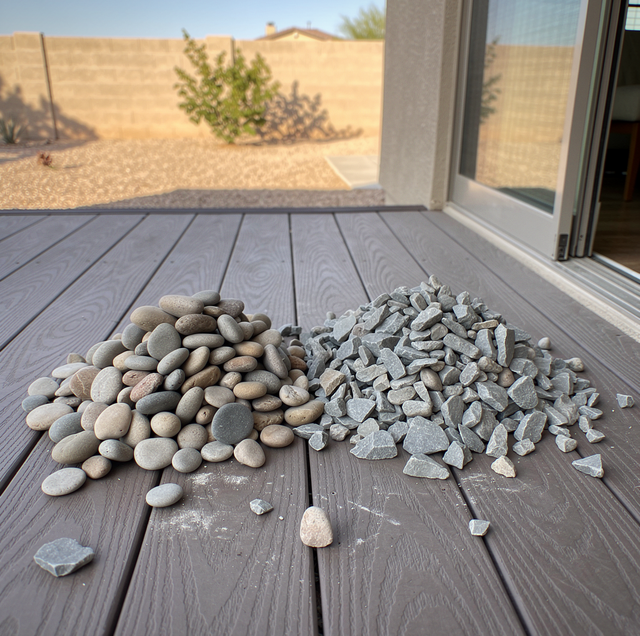
Beach pebbles and crushed rock get grouped as "gravel" all the time, but they start from opposite processes and end up with opposite shapes. Beach pebbles form through years of tumbling in moving water, which grinds down every sharp edge until you're left with a smooth, rounded stone that's comfortable to touch and easy on bare feet. Crushed rock is mechanically broken from larger stone, so every piece retains the sharp, angular faces formed during fracturing.
That single difference in shape drives almost everything else about how these two materials perform once they're spread across your property. Shape controls how water moves through a layer of stone, how the pieces lock together (or don't), how they feel underfoot, and how much they shift around after a season of foot traffic, pets, and weather. Picking between them isn't really about which one looks nicer in a photo. It's about matching the stone's shape to what that particular spot in your yard actually needs to do.
How Shape Changes Drainage
Water moves through a layer of loose stone based on the size and shape of the gaps between individual pieces, and that's where the two materials part ways. Rounded pebbles pack together imperfectly no matter how you spread them, since spheres and near-spheres always leave curved gaps between each point of contact. Water drains through those gaps quickly and doesn't pool the way it can in flatter material, which is part of why pebbles show up so often around drains, in dry creek beds, and along low spots that need to move water away fast.
Angular crushed rock behaves differently. The flat, jagged faces on each piece nest tightly against neighboring pieces, especially once foot traffic or vehicle weight presses them together over time. That tighter packing reduces the size of the air gaps between stones, which can slow drainage somewhat compared to a bed of loose pebbles. However, it also provides the material with greater structural stability for surfaces that need to bear repeated loads, such as a base layer under pavers or a compacted path.
Neither behavior is automatically better. A spot that needs water to pass through and disappear, like a splash zone under a downspout or a low-lying drainage channel, generally benefits from the free-draining nature of rounded stone. A spot that needs to stay firm and support weight, like a walking path that sees regular vehicle or equipment traffic, benefits more from the interlocking grip that angular pieces provide once they're compacted.
Comfort Underfoot Changes The Calculation
Nowhere does shape matter more than in spots where people will actually be walking, sitting, or lying down on bare skin. Smooth, rounded pebbles are the obvious pick for barefoot paths, pool surrounds, and play areas, since there's no sharp edge anywhere on the stone to catch a heel or dig into a foot. That same rounded profile is why pebbles so often appear as a decorative border right at a pool's edge, where feet are wet, bare, and constantly moving across the surface.
Crushed rock is a different experience entirely. Every piece has at least one sharp, flat face, and stepping on that face at the wrong angle is uncomfortable at best. For a purely walked-on, barefoot-adjacent space, angular gravel isn't a comfortable choice, and most suppliers will steer buyers away from it for exactly that reason.
That doesn't mean crushed rock has no place near people. It works fine in spots where shoes are expected, like a side yard path, a utility strip along a fence line, or a parking pad, where the sharp edges that make it uncomfortable underfoot are also part of what gives it grip and stability for foot and vehicle traffic in work-oriented areas.
How Each Material Holds Up To Regular Foot Traffic
Foot traffic affects rounded and angular stone in noticeably different ways over months and years of use. Because pebbles don't lock together, regular walking pushes them around. They scatter to the edges of a path, get kicked into planting beds, and gradually thin out in the exact spots that see the most foot traffic, leaving bare patches where the underlying base material starts to show through. That scattering tendency is worse on a slope, or anywhere water runs across the surface, since rounded stone rolls and washes more easily than flat-faced material.
Crushed rock resists that kind of drift because the angular faces catch against each other and against the base layer beneath. A well-compacted bed of crushed rock holds its shape under repeated foot traffic far longer than an equivalent bed of pebbles, which is a big part of why it's the standard choice for pathways, driveways, and other high-traffic surfaces that need to maintain a consistent, walkable grade over time.
The trade-off is that once crushed rock compacts into a tight, locked layer, it's harder to loosen back up if you ever want to rework the area, whereas a bed of pebbles can be raked and redistributed by hand whenever it needs refreshing.
Settling Patterns You'll Notice Over Time
Every loose stone material settles to some degree, but the pattern looks different depending on shape. Pebbles settle by shifting laterally, rolling toward low points, and gradually spreading beyond their original boundary unless they're contained by an edge restraint. You'll typically notice this as thin spots in high-traffic zones and stray stones that end up well outside the bed they started in.
Crushed rock settles by compacting downward and interlocking rather than spreading outward. Once it's been walked on and rained on a few times, the top layer knits together into a firmer surface that resists further movement, which is exactly the quality that makes it useful as a structural base material under pavers, patios, and walkways. That same interlocking behavior means crushed rock needs less frequent topping off than a bed of pebbles in a high-traffic spot, though it also means any low spot that develops is harder to correct without disturbing the whole compacted layer.
Edge restraints, whether metal edging, a paver border, or a raised bed wall, help control settling in both materials, but they matter more for pebbles, since without a firm boundary, rounded stone has nothing to stop it from rolling straight out of the intended area.
Two Very Different Looks
Beyond how each material performs, the visual difference is just as real and often the deciding factor for buyers. Rounded pebbles read as clean, uniform, and calm. Their smooth surface and consistent shape suit a modern or minimalist design direction, especially when used in a single color as a simple ground cover, a border around planting beds, or a smooth accent inside a water feature.
Crushed rock reads as rougher and more textured, with visible facets that catch light differently from every angle. That texture fits a rugged or natural aesthetic well, and it tends to recede into a supporting role rather than serve as a design centerpiece, which is exactly what you want under a paver base or along a working utility strip, where you don't want the eye drawn to the ground cover itself.
Color and size selection matter for both, but the difference in shape is what really separates a smooth, contemporary ground plane from a coarser, more rustic one. Mixing the two in the same sightline rarely looks intentional, so most designs commit to one shape family for a given area and switch materials cleanly at a border, path edge, or planting bed line rather than blending them together.
Maintenance Realities For Each Material
Ongoing upkeep differs for pebbles and crushed rock, and it's worth knowing what you're signing up for before you commit a large area to either. Pebble beds need periodic raking to redistribute stones that have scattered due to foot traffic, wind, or water flow, and they'll need occasional topping off as some material inevitably works its way into the surrounding soil or planting beds over the years. Debris such as leaves and other plant material also tends to sit visibly on top of smooth pebbles rather than settle between them, so surface cleaning is usually part of the routine.
Crushed rock holds its footprint better, which reduces redistribution work, but weeds and windblown seeds can take root more easily in the finer particles and soil that accumulate in the gaps between angular pieces over time. A weed barrier fabric underneath both materials cuts down on weed growth, though pebbles benefit slightly less since their looser packing lets more sunlight and moisture reach the soil underneath.
Both materials are low-maintenance compared to living ground cover, but neither is maintenance-free. Choosing based on looks alone, without factoring in how much raking, topping off, or weeding you're willing to do, is a common source of buyer's remorse.
Matching The Material To The Use Case
Given all of that, the practical approach is to think area by area rather than picking one material for the entire property. A pool surround, a barefoot path, or a play area calls for rounded pebbles because comfort underfoot outweighs everything else in those spots. A drainage channel, dry creek bed, or splash zone under a downspout also favors pebbles, since fast drainage and a smooth appearance both point the same direction.
A driveway approach, a heavily walked path in shoes, or any base layer that needs to bear weight and hold a grade calls for crushed rock, since interlocking stability matters more than surface comfort in those spots. A utility strip, a side yard, or any working area where appearance is secondary to function is also a reasonable fit for angular material.
Plenty of properties end up using both, with pebbles handling the comfort-focused and decorative zones and crushed rock handling the structural and high-traffic zones, separated by a clean edge or transition point. Bringing a few photos or measurements of the specific spot you're working on to a stone supplier makes it much easier to get a straight answer on which shape and size will actually hold up in that exact location.
Frequently Asked Questions
Can beach pebbles and crushed rock be mixed in the same bed?
They can be placed side by side with a clear border between them, but blending the two shapes together in one bed usually looks unintentional and makes raking or topping off harder, since you're managing two different settling behaviors in the same space. Most designs keep them in separate zones instead.
Which material is better for a dog run or pet area?
Rounded pebbles are generally more comfortable on paws and less likely to cause irritation from sharp edges, though a dog run also sees heavy foot traffic, so expect more raking and topping off than you would with a walkway that only sees the occasional visitor.
Does stone size affect how much a material shifts underfoot?
Yes. Larger pebbles and larger crushed pieces both resist scattering better than fine, small-diameter stone, since bigger pieces have more mass and more surface contact with their neighbors. Size and shape work together, so a small, rounded pebble will always shift more easily than a large one.
How deep should a layer of loose stone be for a walkway?
A functional depth typically runs a few inches over a properly prepared base, though the exact amount depends on the stone's size and how much traffic the path sees. A supplier can help translate the square footage of your specific path into the right volume for the depth you need.
Do edge restraints matter more for one material than the other?
Edging helps contain both materials, but it matters more for pebbles, since rounded stone has no natural hold once it starts rolling. Crushed rock's interlocking shape gives it some self-containing structure even without a hard edge, though a restraint still helps keep either material from spreading into lawn or planting areas.
Is one material easier to walk on with shoes versus bare feet?
Rounded pebbles are comfortable both barefoot and in shoes, which is part of why they're used around pools and play areas. Crushed rock is fine in shoes but uncomfortable and sometimes painful to walk on barefoot, so it's best reserved for paths and work areas where footwear is expected.
Bring your yard's measurements in for a free look — walk through beach pebble and crushed rock options side by side and get help matching the right stone to each area of your property. North Valley Stone Supply LLC serves Phoenix, Scottsdale, and Tempe. Call (623) 244-8657.