
Choosing Paver Color for a Hot Climate: What to Know
A charcoal paver sample looks sharp on a showroom shelf. Laid across a full patio in direct sun for a summer afternoon, that same charcoal can climb well past the temperature of a lighter buff or tan unit a few feet away. The color did not change; the amount of solar energy it absorbed instead of reflected did. Choosing a paver color is really choosing how much heat that surface holds onto every day it sits in the sun, and that decision affects comfort, fading, and how the finished space actually gets used for as long as the pavers are down.
None of this means dark pavers are off the table or that light pavers are automatically the right call. Color is a performance choice as much as a design one, and the two goals sometimes pull in different directions. Understanding the mechanism behind paver heat, how fading actually happens, and where the tradeoffs land makes it possible to pick a color that still looks good in year one and still feels good underfoot in year ten.
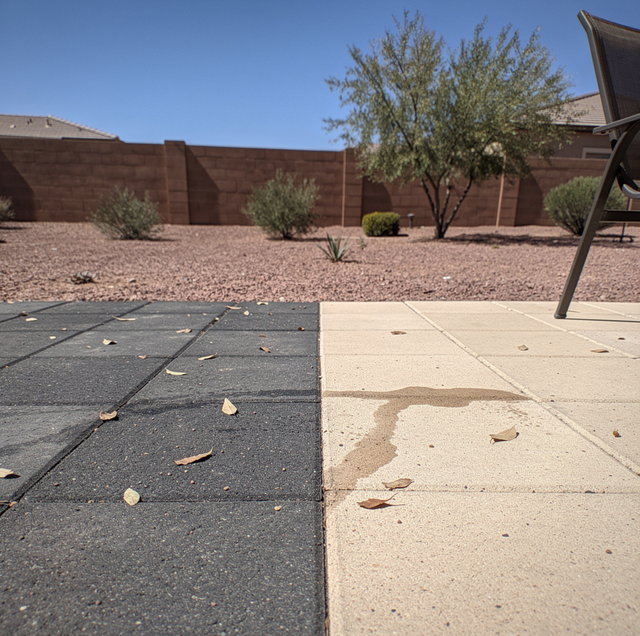
Why Paver Color Changes Surface Temperature
Every surface exposed to sunlight absorbs some of that energy and reflects the rest. A dark, low-reflectance surface absorbs a larger share of incoming light and converts it to heat, which is why black asphalt gets noticeably hotter than a concrete sidewalk on the same afternoon. Pavers work the same way: a charcoal or deep brown unit absorbs more of the sun's energy, raising the surface temperature of the stone or concrete itself, not just the air above it.
Lighter colors reflect a larger portion of that light rather than absorbing it, so less energy is converted to heat at the surface. This is measured by a metric called the light reflectance value (LRV), on a scale where a higher number means more light bounces back rather than being absorbed. A pale sand or buff paver typically carries a meaningfully higher LRV than a charcoal or near-black unit, and that gap shows up directly as a gap in surface temperature on a sunny day.
The gap is not small. Testing of outdoor paving materials has repeatedly shown differences of 20 degrees or more between a dark and a light sample when they sit side by side under identical sun exposure. That is enough to be the difference between a comfortable bare foot and one that gets pulled back immediately.
How Pigment and Surface Finish Add to the Effect
Color is not the only variable at work. How the color gets into the paver and what finish sits on top both affect how much heat builds up and how long that color holds.
Concrete pavers get their color one of two ways: mixed all the way through the unit, or applied as a pigmented top layer, sometimes called a face-mix. A through-body color stays consistent as the surface wears, since the same pigment runs deeper into the material. A face-mix concentrates more pigment where it is seen, producing richer color for less material cost, but the visible layer is thinner and more exposed to whatever weathering hits that top surface directly.
Natural stone carries color differently, since the mineral content of the stone determines the hue rather than an added pigment, and that natural coloring generally resists fading far longer than a manufactured pigment does. This is one reason natural stone in lighter tones is a common pick for surfaces that need to stay cool and hold their look with little upkeep.
Finish matters too. A glossy sealer reflects a little more visible light than a matte finish on the same color, though the difference is modest compared to the color choice itself. A matte or textured finish, more common on pool decks, prioritizes slip resistance over the small gain in reflectance, usually the right trade-off where wet feet are a daily reality.
Barefoot Comfort: Where Color Meets Real-World Use
Surface temperature only matters where skin actually touches the surface, which narrows the real decision to a handful of zones: pool decks, spa surrounds, patios with lounge furniture, and any path a family walks barefoot. A driveway or front walkway sees shoes, not bare feet, so heat performance there is a much smaller factor than it is around a pool.
For those barefoot zones, a lighter color is doing real work, not just following a design trend. A pale, high-LRV paver stays walkable through more of the day, which matters most in the early afternoon when the sun sits highest, and a dark surface nears its peak temperature. Traditional favorites for pool surrounds, including light travertine and pale concrete blends, earned that reputation because they measurably stay cooler underfoot than darker alternatives.
Texture plays a supporting role too. A rougher or tumbled finish holds less direct contact area against bare skin than a smooth, polished one, making a slightly warmer paver feel more tolerable than a smooth paver at the same actual temperature. That effect is smaller than the color effect, but it is worth factoring in for a family with young kids who spend a lot of time barefoot near water.
Fading, UV Exposure, and Why Some Colors Age Better
Heat absorption and fading come from the same root cause: sustained ultraviolet exposure. The same UV energy that raises a dark paver's surface temperature also breaks down pigment molecules over years of exposure, and darker, more saturated colors generally show that breakdown more visibly than muted or earth-tone colors, since the contrast between the original hue and the faded version is more noticeable to the eye.
This does not mean light pavers never fade or dark pavers always fail. It means heat and fade tend to move together: the surface characteristics that make a color absorb more energy also make its pigment work harder against sun exposure year after year. A through-body color resists this better than a thin surface-applied pigment, since fresh color underneath stays available even as the top layer weathers.
Sealing slows fade, since a quality sealer blocks some UV penetration and reduces the surface degradation that speeds pigment breakdown, though it needs to be reapplied periodically rather than treated as a one-time fix. A blended color, covered below, also tends to show fade less obviously than a single saturated tone, since there is no flat color for the eye to compare against a faded version.
Balancing Heat Performance Against the Look You Want
The real tension: the colors that read as richest in a showroom photo- deep charcoals, espresso browns, near-black blends- are also the colors that run hottest underfoot and fade the most visibly. The colors that perform best against heat and hold their look longest, pale sands, warm buffs, light grays, tend to read as more subdued against a bold exterior scheme.
Neither end of that spectrum is wrong. A dark paver framing a shaded side yard or a covered entry rarely gets touched by bare feet and is not baking in full exposure all day, so its heat performance matters far less than its design impact. That same dark tone wrapped around an unshaded pool deck is a different decision, since it resists full-sun exposure and constant barefoot contact at once.
The practical approach is to let the paver's location, not a single favorite color, drive the choice. Reserve the deepest, richest tones for shaded or low-traffic areas, and save the lighter, cooler-performing tones for the zones that get full sun and bear the brunt of bare feet. A single project can reasonably use two different paver tones this way rather than forcing one color to do every job.
Color Blends and Multi-Tone Pavers: A Middle Ground
Manufacturers address this exact tension with blended pavers, which combine two or more colors in the same unit rather than a single flat tone. A blend pairing a warm tan with a soft gray lands at a moderate overall reflectance between the two extremes, running cooler than a solid charcoal without going as pale as a plain sand color.
Blends also hide the visual evidence of fading better than solid colors do. Because the surface already reads as multiple tones, a gradual color shift in any single pigment shows up as a subtler change in the overall mix rather than a stark before-and-after contrast. That same variation camouflages dust, mineral deposits, and general wear, which is part of why blended pavers have become the default choice for a large share of new patio and pool-deck installs.
The tradeoff with a blend is mostly aesthetic: a homeowner set on a single, high-saturation color for a clean, modern look loses some of that crispness with a multi-tone product. For most projects balancing heat, fade resistance, and appearance at once, a blend gives up the least on any single front.
Practical Steps to Test a Color Before Committing
A sample chip under fluorescent light in a store tells very little about how a color performs outdoors in full sun. Before finalizing a color for any area that will sit in direct exposure, request full-size sample pavers and set them in the actual installation spot for a few full days, then check them at the hottest part of the afternoon with a bare hand or foot, not just a glance. Comparing two or three finalist colors side by side, at the same time of day, removes the guesswork a single sample viewed in isolation cannot answer, and shows how each option looks against the actual house exterior and existing hardscape.
Where a project spans a patio and an adjoining pool deck, test colors separately for each zone; the two areas make different demands on the paver.
Frequently Asked Questions
Does a sealer make pavers hotter or cooler?
A high-gloss sealer can reflect a small amount of additional visible light compared to an unsealed or matte-finished surface, but the effect is minor compared to the impact of the base color itself. More relevant for heat is that some enhancing sealers slightly deepen or saturate the paver's color, which can nudge a borderline color into a hotter-running range; a natural or matte sealer avoids that shift.
Is there a specific LRV number to look for in a paver?
There is no single required number, since acceptable heat depends on how a surface gets used, but reflectance testing on paving materials generally groups pale sands and light grays in a noticeably higher LRV range than charcoal and near-black units. Asking a supplier for the LRV rating or reflectance class of a specific product line, when available, gives a more precise comparison than judging by eye alone.
Do lighter pavers show stains and dirt more than dark ones?
Often the opposite is true for a single, uniform light color, since dust and mineral deposits can show up as a visible contrast against a very pale, flat surface. A blended or variegated light-toned paver largely solves this, because the existing color variation camouflages dust and mild staining the same way it camouflages fade, which is one reason blends outperform solid pale colors on this specific point.
Can a faded dark paver be restored without replacing it?
A color-enhancing sealer can temporarily deepen and refresh a faded surface-applied pigment, restoring much of the original visual richness for a period before it needs to be reapplied. This works best on pavers with a face-mix or surface-applied color; a through-body colored unit that has actually worn down at the surface responds less dramatically, since the fading there reflects actual material loss rather than just a dulled top layer.
Does paver shape or size affect surface temperature?
Shape and size do not meaningfully change surface temperature, since heat absorption is driven by color and material composition rather than the unit's geometry. Joint width has a small secondary effect: wider joints filled with polymeric sand or fine gravel expose more lighter-colored jointing material between units, which can slightly moderate the average surface reading across a field of dark pavers.
How much cooler is a shaded paver area compared to full sun?
A paver in consistent shade, whether from a structure, a tree canopy, or a pergola, stays dramatically closer to ambient air temperature than the same color and material sitting in full, direct sun, often by several tens of degrees at peak afternoon heat. That gap is large enough that adding shade over a dark-paved area can matter as much for comfort as choosing a lighter color would, and the two strategies work well together rather than as substitutes.
Bring your color shortlist to the yard — compare full-size samples side by side before you commit. North Valley Stone Supply LLC serves Phoenix, Scottsdale, and Tempe. Call (623) 244-8657.