
Glass vs Ceramic Pool Tile: Which Lasts Longer in the Sun?
Why Sun Exposure Matters for Pool Tile
Pool tile sits in one of the toughest spots on your property. It gets direct sun for most of the day, sits partly submerged in treated water, and experiences constant temperature swings between the waterline and the deck above it. Over years, that combination is what separates tile that still looks sharp from tile that looks tired and dull.
Glass and ceramic are the two materials you'll compare most often for waterline and accent tile. Both can hold up well, but they age differently under sun, hard water, and pool chemicals. Knowing how each one responds helps you choose a material that still looks good a decade from now, not just on installation day.
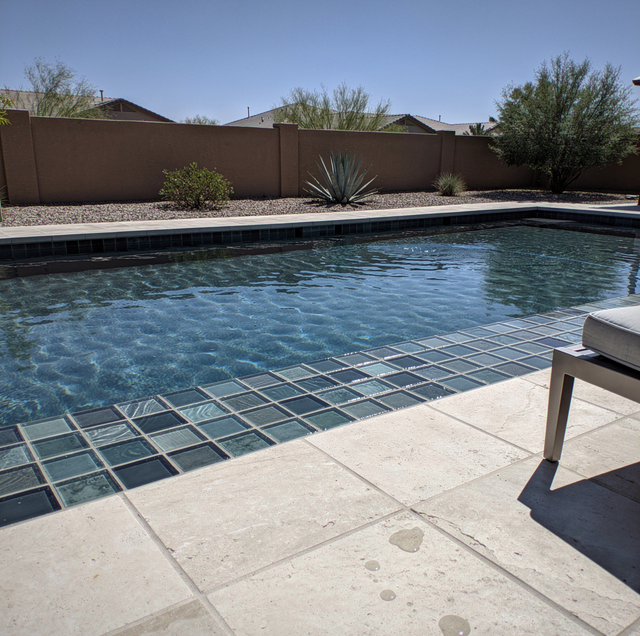
How Glass Pool Tile Handles Heat and UV
Glass tile is made by melting glass and, in most cases, fusing color pigment or a reflective backing into the glass itself rather than applying it as a surface coating. Because the color runs through the material rather than sits on top of it, UV rays have very little to work with. Like a fired ceramic glaze, glass is an inorganic, vitreous material with nothing organic in it for UV to break down, which is why neither one fades from sun exposure the way an organic dye or paint pigment can.
This is one reason glass tile is popular for waterline bands, spillways, and accent strips that get hit by reflected sunlight off the water's surface for hours a day. The surface also tends to stay glassy and smooth rather than developing the faint chalky look that some glazed surfaces can pick up over years of aggressive water chemistry or abrasive cleaning.
Glass is not indestructible, though. Both glass and ceramic glaze resist scratching well in normal pool use, but glass is a more brittle material, meaning a sharp, direct impact is more likely to chip or crack a glass tile than a ceramic one.
How Ceramic Pool Tile Handles Heat and UV
Ceramic pool tile starts as a fired clay body, then gets a glaze fired onto the surface for color and shine. Firing turns that glaze into an inorganic, glass-like coating, so it holds up against UV the same way glass tile does. The color and shine of a quality glaze won't fade just because the tile sits in the sun.
What wears a glaze down over time is chemistry and friction, not sunlight. Low-pH water or heavy acid washing used to strip scale can etch a glaze's surface, and abrasive scrubbing does the same thing over repeated cleanings. Matte or textured glazes tend to show that kind of chemical and abrasive wear more readily than a smooth, glossy glaze, simply because there's more surface texture for etching and scrubbing to catch on. Unglazed or textured ceramic surfaces are also more porous by nature, which gives water and pool chemicals more contact area to work on over time.
The clay body beneath the glaze is more resistant to blunt impact than glass, which is why ceramic is often chosen for pool steps, benches, and other high-traffic areas where something might be dropped or scraped.
Calcium Scale: Which Shows It More
Hard water is a common issue for pool owners, and calcium scale on pool tile is one of the most frequent complaints. Scale forms at the waterline when water evaporates, leaving behind the calcium and other minerals it carried, building up as a crusty white deposit over time.
Surface texture plays a bigger role in scale visibility than most people expect. Glass tile has a naturally smooth, non-porous surface, so scale tends to sit on top of it rather than bonding into microscopic pores. That makes buildup easier to see against a glossy background, but it also makes it easier to scrub off without damaging the tile.
Ceramic tile, particularly styles with a slightly textured or matte glaze, gives calcium more surface area to grip. Once scale gets into fine textures or grout lines between ceramic pieces, it can be harder to fully remove and may leave a duller finish behind, even after cleaning. Grout itself, regardless of tile type, is more porous than either material and is usually where the heaviest scale buildup shows up first.
Comparison Table: Glass vs Ceramic Pool Tile at a Glance
| Factor | Glass Pool Tile | Ceramic Pool Tile |
|---|---|---|
| UV / fade resistance | Color is fused through the material; very resistant to fading | Fired glaze is also UV-stable and resists sun-fading; wear instead comes from water chemistry and abrasion |
| Calcium scale visibility | Smooth, non-porous surface; scale sits on top and wipes off easier | Textured or matte glazes can trap scale; grout lines catch buildup |
| Impact durability | Resists scratching well but more prone to chipping or cracking on impact | Thicker body and clay core resist chipping slightly better on impact, though still a brittle material |
| Color retention long term | Very stable; minimal sheen loss over years | Equally UV-stable; matte or textured glazes show chemical and abrasive wear sooner than glossy finishes |
| Surface texture | Typically smooth and glossy | Ranges from glossy to matte or textured, depending on style |
| Cutting and custom shapes | More difficult to cut precisely; often used in mosaic sheets | Easier to cut and fit around curves, steps, and spillways |
| Installation considerations | Needs setting materials made for non-porous glass to prevent moisture and cloudiness behind the tile | Standard thinset and grout methods generally apply |
| Best-fit applications | Waterlines, spillways, accent bands, water features | Full pool fields, steps, benches, high-traffic surfaces |
Durability and Impact Resistance
Durability isn't just one property. Scratch resistance, impact resistance, and chemical resistance all factor in, and glass and ceramic don't rank the same way on each one.
Glass resists scratching and chemical etching very well, and its smooth, non-porous surface has no glaze layer that can be worn down by chemical exposure or abrasive cleaning over time. But glass is a rigid, brittle material, so a hard, direct hit, such as a dropped tool or a pool accessory striking the tile edge, is more likely to chip or crack it than it would a ceramic tile in the same spot.
Ceramic tile is typically made with a thicker body than glass tile, and its fired clay core resists chipping slightly better against hard, direct impacts, even though ceramic is still a brittle material overall rather than a flexible one. It's also generally easier to source matching replacement pieces, since ceramic tile is manufactured in more standardized production runs. That's a practical consideration if you expect a section of tile to need occasional spot repair over the life of the pool.
Color Retention Over the Years
If long-term color consistency across an entire pool is your top priority, the good news is that both glass and fired ceramic glaze hold up well against sun exposure. Neither one fades from UV the way an organic-dye finish would, so a glass or well-glazed ceramic tile installed today should still look close to its original color in a decade, assuming normal water chemistry and cleaning.
The two materials differ over time in how they handle water chemistry and everyday wear. Ceramic glaze can be etched by aggressive water chemistry or worn down by abrasive cleaning faster than glass, which has no glaze layer to lose. Finish matters, too: matte or textured glazes have more surface area for mineral scale to lodge, so they tend to accumulate buildup more readily than smooth, glossy surfaces. Even so, the same amount of scale is often less visually obvious on a matte or textured finish than on a glossy one, since a glossy surface reflects light evenly, making any deposit stand out sharply by contrast.
Installation Considerations Worth Knowing
Glass and ceramic tile aren't installed with identical methods, and the difference matters for how the finished surface performs over years, not just how it looks on day one.
Because glass is non-porous, it needs setting materials and adhesives formulated specifically for glass tile. Standard thinset made for porous materials can trap moisture behind non-porous glass, which sometimes leads to a cloudy or hazy appearance under the tile surface later on. Glass tile is also frequently sold in mosaic sheets, which makes it well suited to curved surfaces like spillways and rounded step edges, but it does require more careful spacing and grout work than larger-format tile.
Ceramic tile is generally easier to cut to fit around steps, drains, and curves, and it works with more conventional thinset and grout products. If your project involves a lot of custom trim work, ceramic tends to be the more forgiving material to fit into tight or irregular spaces.
If you're sourcing tile for a project, it's worth confirming with your contractor or installer which setting materials they plan to use for the specific tile you select, since the wrong combination can shorten the life of an otherwise good material.
Maintenance and Cleaning Differences
Both materials handle routine cleaning well, but the approach differs slightly. Glass tile's smooth surface means most scale and residue can be removed with a non-abrasive pad and a scale-safe cleaner with minimal effort, and there's little risk of dulling the finish since there's no glaze to wear through.
Ceramic tile can generally handle the same cleaning products, but abrasive pads or overly aggressive scrubbing on a glazed surface can eventually wear down the glaze's sheen, especially on softer or older glazes. Textured ceramic finishes may need a soft brush worked into the texture itself to fully clear out embedded scale, since a flat wipe won't reach into the grooves.
Grout maintenance matters equally for both tile types. Sealing grout lines and staying ahead of scale buildup at the waterline will do more for long-term appearance than the choice of tile material alone.
Which One Fits Your Project
There isn't a single winner for every pool. Glass tile makes sense where color consistency and long-term shine matter most, particularly for waterline bands, accent strips, and water features that draw a lot of visual attention. Ceramic tile makes sense for larger surface areas, steps, and high-traffic zones where impact resistance and easier custom cutting are more valuable than maximum fade resistance.
Many pools use both: ceramic for the bulk of the tile field and glass for the waterline or a decorative accent band. That combination lets each material do the job it handles best.
Frequently Asked Questions
Where should glass go versus ceramic when a design uses both?
The deciding factor is usually where your eye lands first. Waterline bands and spillway lips sit at eye level and catch reflected light off the water, so that's where glass tends to earn its keep, even as a narrow accent band. Save ceramic for surfaces people touch or walk on, like steps, benches, and the broader pool field, where cutting flexibility and impact resistance matter more than shine. If a design mixes materials at a transition point, such as where a glass waterline band meets a ceramic field, plan that detail with your installer ahead of time so tile thickness and grout lines line up cleanly.
Does tile color affect how hot the surface gets around the pool edge?
Darker tile absorbs more heat and can feel noticeably warmer to the touch on the coping and waterline areas during peak sun hours, regardless of whether it's glass or ceramic. Lighter and more reflective finishes, including many glass tiles, tend to stay cooler underfoot and to the touch.
Is every pool tile style rated for full submersion in water?
No. Some ceramic and glass tile lines are made for decorative wall or backsplash use and aren't rated for continuous submersion in pool water. Always confirm that a tile is specifically designed and rated for pool or water feature use before ordering it for a waterline or submerged application.
Does a glossy or matte finish change how visible scale becomes?
Yes, independent of whether the tile is glass or ceramic. Glossy finishes reflect light evenly, so thin scale deposits often stand out more sharply against the shine. Matte and textured finishes scatter light, which can actually mask light scale visually even though it may be sitting in more surface texture underneath.
Does the waterline tile have to be replaced along with the rest of the pool?
Usually not. Waterline tile is typically installed as a separate band, distinct from the pool's main plaster or tile field, so a pool contractor or tile installer can often remove and replace just that section without affecting the rest of the pool. Matching the new tile's thickness and setting method to the existing installation is the main technical detail your installer will need to get right.
Does grout color matter differently for glass versus ceramic tile?
It does. Because color runs through glass tile rather than sitting on the surface, a grout line right next to it can pick up faint reflected color shifts at certain angles, so a neutral or closely matched grout usually keeps a glass installation looking the most uniform. Ceramic tile's opaque glaze isn't affected by nearby grout color in the same way, which is why contrasting grout is a more common design choice there, often used to outline a pattern on steps or borders. On either tile type, darker grout has the side benefit of making waterline scale less visually obvious between cleanings.
Compare glass and ceramic pool tile in person — visit the showroom or call to check current colors and sizes in stock. North Valley Stone Supply LLC serves Phoenix, Scottsdale, and Tempe. Call (623) 244-8657.