
How to Pick Pool Tile That Resists Calcium: 6 Buying Rules
The white band that creeps along a waterline is calcium that left the water and hardened onto the tile, and the surface you chose partly decides how fast it grabs hold and how hard it is to clean off. No tile on the market is calcium-proof, so any showroom claim that one is should be treated as marketing rather than fact. What a good tile can do is give scale far fewer places to anchor, which turns a monthly scrubbing chore into an occasional wipe. Picking well starts with understanding why the crust forms in the first place, then reading the one property that separates easy-clean tile from a maintenance headache.
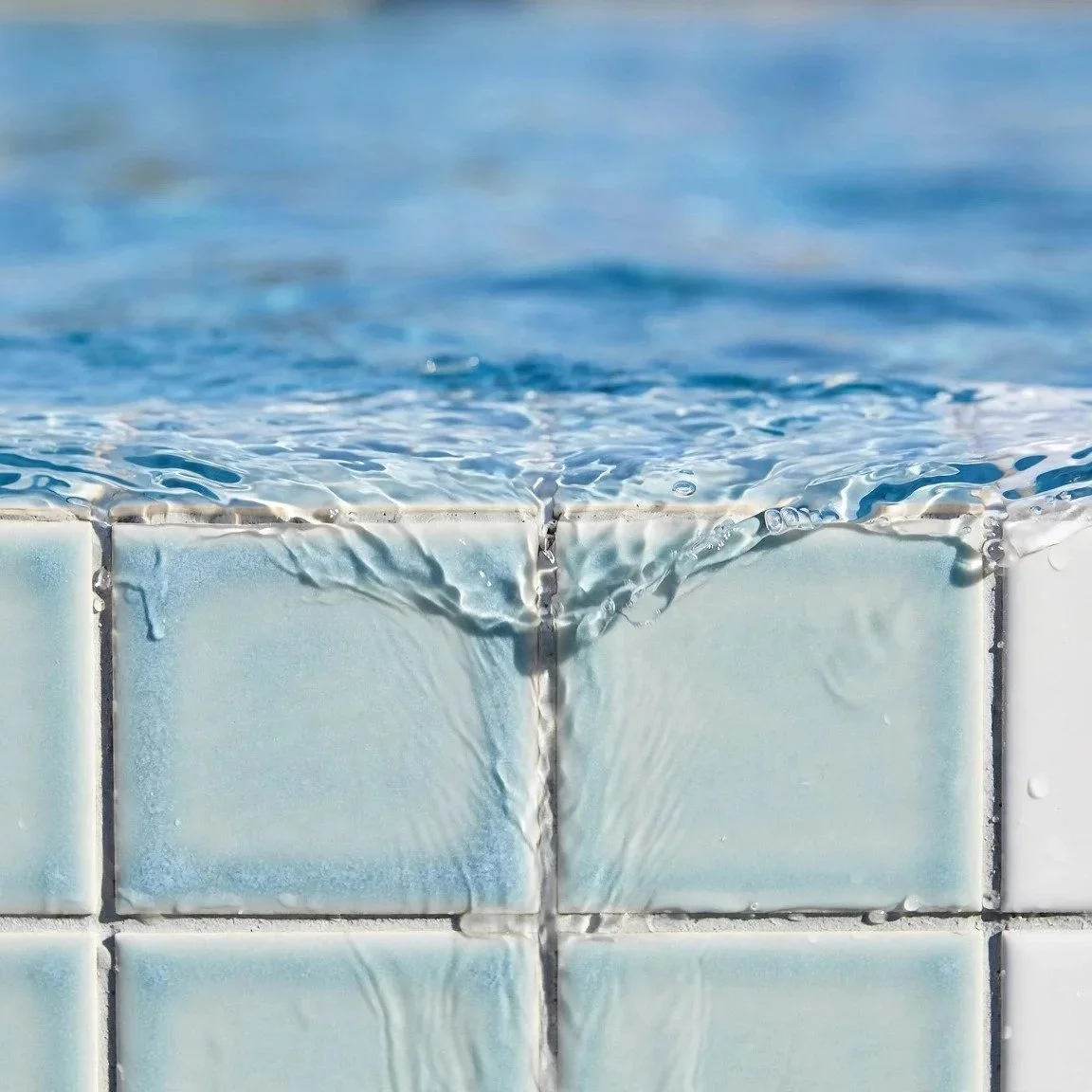
Where Waterline Scale Actually Comes From
Pool water always carries dissolved calcium, and it holds that mineral in solution only inside a narrow chemistry window. When the water tips out of balance, the calcium drops out and cements itself to the first surface it meets. Three drivers push it out: high pH, high total alkalinity, and high calcium hardness, all common where the tap water is hard to begin with.
Evaporation then focuses the problem in one narrow strip. As surface water leaves as vapor, the calcium it was carrying stays behind and builds up right at the water's edge. The mineral it forms is calcium carbonate, the same chalky compound that furs up a kettle. That is why the crust shows up as a tight ribbon at the waterline rather than spreading evenly across the submerged tile below it. The tile you install there is the surface taking the daily hit.
The One Property That Decides Everything: Surface Porosity
Two things about a tile surface control how readily scale sticks: how smooth it is and how porous it is. Porosity is the measure of tiny open pores in the material, and it is the property that matters most for scale.
A porous, textured surface behaves like fine sandpaper at the microscopic level. Its open pores and rough peaks give calcium thousands of tiny footholds to lodge in and grip, so scale keys into the surface and later resists brushing. A dense, non-porous, glassy-smooth surface offers almost nothing to grab, so the same deposit sits loosely on top and lifts with far less effort.
The kettle comparison is worth finishing. Scale bonds tightly to a rough old kettle element but rinses off a smooth glass carafe, even though both saw identical water. The water was the same; the surface decided how hard the deposit held on. Pool tile behaves the same way, which is why porosity, not brand or color, is the number you want to ask about before anything else.
How the Common Waterline Materials Compare: Glazed porcelain: Porcelain is fired dense with very low water absorption, and the glaze adds a hard, glassy, non-porous skin on top. Scale has little to key into, so carbonate tends to sit on the surface and wipe away rather than bonding into the body. Porcelain's dense body also shrugs off the freeze-thaw cycling that can spall softer tile where nights turn cold, one reason it is a common waterline pick.
Glazed ceramic: A quality glazed ceramic gives you the same non-porous glazed face. The body behind the glaze is softer and more absorbent than porcelain, so the glaze is doing the real work. As long as that glaze stays intact and uncracked, it resists scale much like porcelain does.
Glass: Glass tile is essentially non-porous through and through, giving one of the smoothest, least grippy waterline surfaces available. Calcium deposits tend to stay on the surface and release readily. The trade-off is care during cleaning, since aggressive abrasives can scratch or dull glass and a scratched surface starts to hold scale again.
Natural stone and unglazed tile: Travertine, unfilled stone, and unglazed or matte tile are more porous and textured. That open, mineral surface both grabs scale more readily and gives cleaning tools fewer safe options, since acids that dissolve carbonate can also etch the calcium-based stone itself. Stone is prized for its look, but at the waterline of a hard-water pool it is the higher-maintenance choice.
Why a Good Glaze and a Dense Body Both Matter
A glaze is a glassy coating fused onto the tile at high heat, and it is what turns an absorbent body into a sealed, wipeable face. The glaze quality is what you are buying for scale resistance: a fully glazed, uncracked surface leaves calcium little to hold. Once a glaze crazes into hairline cracks or chips, those openings become the exact footholds you were trying to avoid, so a durable glaze rated for pool immersion earns its keep.
The body underneath still matters, even hidden behind the glaze. A dense, low-absorption body such as porcelain resists water intake, handles temperature swings, and supports the glaze so it is less likely to crack over years of cycling. A soft, thirsty body is more prone to problems if the glaze is ever breached. For a waterline that faces constant wet-dry cycling and, in colder months, near-freezing nights, pairing a good glaze with a dense body gives you the most forgiving surface long term.
Grout and Setting Considerations
The tile is only part of the waterline. The grout lines between tiles are often more porous than the tile face, so they can hold scale and stain even when the tile itself wipes clean. An epoxy grout resists water intake and chemicals far better than standard cement grout, which makes the joints easier to keep clear and less prone to soaking up minerals. Matching the grout color to the tile also hides the faint residue that any waterline eventually collects.
Setting materials matter too. Waterline tile should be set with a submersion-rated thin-set made for continuous water contact, not a general-purpose adhesive, so the installation itself lasts as long as the scale-resistant surface you picked. Getting the setting and grout right is trade work worth handing to an installer who does pool tile regularly.
The Part No Tile Can Fix: Water Chemistry
Surface choice changes how easily scale cleans off, but it does not stop scale from forming. Balanced water is what actually keeps calcium in solution so it never deposits in the first place, and that holds true on every tile. Pool professionals track the tendency to scale with the Langelier Saturation Index, a single number that combines pH, temperature, alkalinity, calcium hardness, and dissolved solids. A positive reading means the water is oversaturated and will shed calcium onto any surface it touches, including glass and porcelain.
The takeaway for tile buyers is two-part. A smooth, glazed, low-porosity surface is the right insurance because it makes the scale that does form far easier to remove, but it is insurance, not immunity. Keep the chemistry in range and even a modest tile stays fairly clean; let the chemistry drift and the best tile in the showroom still crusts, it just cleans up more easily afterward.
Cleaning and Maintenance Differences
The surface you pick also decides which cleaning methods stay safe. On smooth glazed porcelain and ceramic, light carbonate usually surrenders to a soft brush, a mild scale remover, or a plastic scraper, and the hard glaze tolerates that routine. Glass wants the gentlest approach, since a pumice stone or coarse pad that is fine on hard tile will scratch glass and leave it duller and grippier than before.
Porous natural stone is the fussiest to service. Pumice can abrade it, and the acids that dissolve carbonate can etch calcium-based stone such as travertine, so cleaning it safely takes a lighter touch and more frequent attention.
Two heavier jobs belong with a professional. Removing thick, hardened scale by bead or media blasting is a specialist task that can damage tile in untrained hands
WARNING: Pool chemicals and acid cleaners are hazardous. Follow the product label, wear the recommended eye and skin protection, and never mix chemicals, since combining them can release toxic gas. Draining a pool to reach heavy buildup carries a real hydrostatic pop risk, so leave draining to a pro who knows the site.
Durability and upkeep, not looks alone, should drive the pick, since a smooth glazed surface that sheds scale saves you cleaning effort for the life of the pool. Bring your water hardness and a photo of your pool to the showroom, and choose the surface whose upkeep you will actually keep up with.
Frequently Asked Questions
Does a darker tile color hide calcium buildup better than a light one?
It hides the early film longer but shows heavy scale worse. Thin carbonate haze is nearly invisible on light or mid-tone tile, while a fresh white crust stands out sharply against dark blue or black glass. Many buyers split the difference with a mid-tone or lightly variegated tile that camouflages both light residue and the faint shadow left after cleaning.
Can I put a scale-resistant coating or sealer on tile to help?
Penetrating sealers are made for porous surfaces like natural stone and grout, not for already non-porous glazed or glass tile, where they have nothing to soak into and can leave a film. On stone, an impregnating sealer reduces how deeply scale and stains penetrate, but it wears and needs periodic reapplication, and it does not replace balanced water chemistry.
Is a matte or textured finish ever worth it at the waterline?
For scale resistance, no. A matte or anti-slip texture that helps on a pool deck works against you at the waterline, since the same micro-roughness that adds grip underfoot also gives calcium extra footholds. Save textured, slip-rated finishes for steps and decking, and keep the waterline itself glossy and smooth.
How does a saltwater pool change the tile decision?
Saltwater systems still form calcium carbonate scale, and the generator's high-pH output can actually raise the scaling tendency at the waterline. The bigger tile issue is that salt is mildly abrasive and hard on grout and some finishes over time, which is another reason to favor a durable glazed surface and a chemical-resistant epoxy grout in a salt pool.
Will glass mosaic sheets scale differently than large-format glass tile?
The glass surface behaves the same, but mosaic sheets pack in far more grout line per square foot, and grout is the more scale-prone part. With mosaics, you get more porous joints that hold residue, so epoxy grout and diligent chemistry matter even more than they would with fewer, larger tiles.
If I am reglazing or resurfacing an old pool, when should I replace the waterline tile?
Replace it during the resurface rather than after. Waterline tile is set into the beam above the new plaster line, so swapping to a smoother glazed or glass tile is far simpler and cleaner while the pool is already drained and the crew is on site than as a separate later job that means draining again.
Bring your water-hardness number and a photo of your pool to the showroom — pick a waterline tile you can actually keep clean. North Valley Stone Supply LLC serves Phoenix, Scottsdale, and Tempe. Call (623) 244-8657.