
Why Your Landscaping Pebbles Keep Washing Away
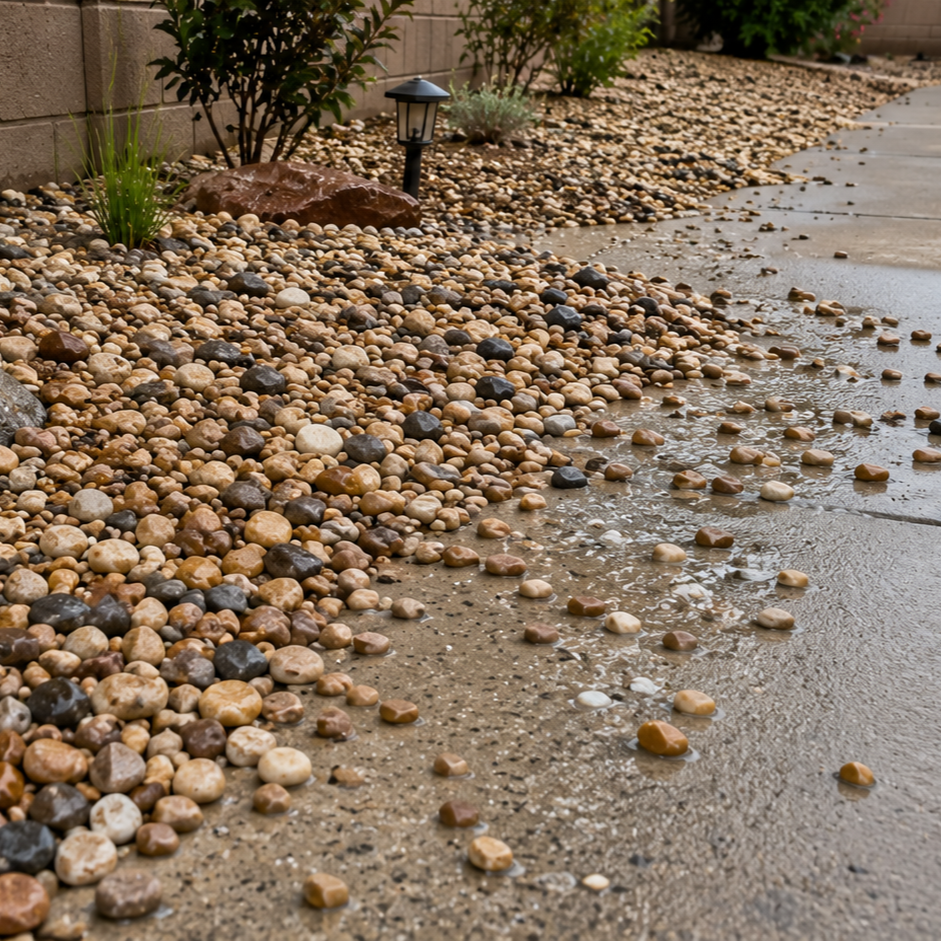
You rake the rock smooth, and after the next storm — or even a heavy watering — your decorative pebbles have piled against a wall, spilled onto the walkway, and thinned out in the middle. In Arizona, where monsoon runoff moves fast, and yards are often graded to shed water, this is a common headache. The good news is that pebbles wash away for a short list of fixable reasons, almost all tied to water and containment.
It's Really About Water and Containment
Loose stone stays put only when two things are true: water isn't running through it hard enough to carry it, and something is holding it in place. When pebbles migrate, one or both of those has broken down — water is flowing across or under the rock, or there's nothing to contain it at the edges and no stable base beneath it. Sort those out, and the rock stays where you put it.
The Common Causes
Runoff With Nowhere to Go
Water is the number-one reason pebbles move. When rain or irrigation runoff flows across a rock bed — especially on any slope — it carries the lighter stones along with it. Arizona monsoons make this dramatic: a short, intense downpour can move a lot of pebbles fast. If the yard's grading channels water through the rock rather than around or under it, the stone will continue migrating.
No Edging or Border
Decorative rock needs a boundary. Without edging — a border of steel, stone, pavers, or a defined trench — there's nothing to stop pebbles from spreading outward and washing onto walkways, driveways, and lawns. Many "creeping" rock beds lack containment.
Pebbles Too Small or Light for the Slope
Smaller, lighter pebbles move much more easily than larger, heavier stones. On a slope or in a high-runoff area, fine pebbles wash away while larger rocks would stay put. Matching the stone size to the slope and water flow is a big part of keeping it in place — steeper or wetter areas need bigger, heavier stone.
No Base or Weed Barrier Underneath
Pebbles spread directly on loose dirt sink into the soil, mix with mud, and migrate as the ground shifts and erodes. A proper setup — compacted ground and a weed-barrier fabric (weed barrier) underneath — gives the stone a stable surface to sit on, keeps it from disappearing into the soil, and reduces erosion beneath it.
Downspouts and Concentrated Water
Downspouts or roof runoff emptying directly onto a rock bed create a firehose effect that blasts pebbles out of place every storm. Concentrated water always wins against loose stone.
| What you see | Likely cause | Fix |
|---|---|---|
| Rock piles up after storms | Runoff flowing through the bed | Improve drainage/grading |
| Pebbles spill onto walks and lawn | No edging or border | Install edging |
| Stone scatters on a slope | Pebbles too small/light | Use larger, heavier stone |
| Rock sinks and thins out | No base or weed barrier | Add fabric and compact base |
| Washout under a downspout | Concentrated roof runoff | Redirect/extend downspout |
How to Keep Pebbles in Place
The lasting fixes match the causes. Start with water: grade the area and add drainage so runoff sheds around the rock bed rather than through it, and extend or redirect downspouts away from the stone. Contain the bed with solid edging on the perimeter so pebbles can't spread. Choose the right stone for the conditions — larger, heavier pebbles for slopes and high-runoff spots, since fine stone simply won't stay. And build a proper base: a weed barrier over compacted ground provides the pebbles with a stable surface, keeps them from sinking into the soil, and limits erosion beneath. In a desert yard, planning for monsoon flow up front is what separates a rock bed that stays put from one you're constantly raking back.
For a spot that keeps washing out no matter what, the real issue is usually drainage — water is being channeled through that area — and correcting the grading or adding a drainage path is what finally stops it.
Frequently Asked Questions
Why do my landscaping rocks wash away every time it rains?
Because runoff is flowing through the rock bed and carrying the lighter stones with it, and there's likely nothing containing them. Rain — especially intense Arizona monsoon downpours — moves loose pebbles fast, particularly on slopes. The fixes are improving drainage so water sheds around the bed, adding edging to contain the stone, and using larger, heavier pebbles in high-runoff areas.
What size rock stays in place best?
Larger, heavier stones stay put far better than small, light pebbles, especially on slopes or in areas with strong water flow. Fine pebbles wash and scatter easily. Matching stone size to the conditions matters: flat, low-runoff areas can use smaller pebbles, but slopes and spots that channel water need bigger, heavier rock to resist moving.
Do I need edging around a rock bed?
Yes, in almost all cases. Edging — steel, stone, pavers, or a defined border — contains the stone and keeps it from spreading onto walkways, driveways, and lawns. Without a boundary, loose pebbles inevitably migrate outward over time. Edging is one of the simplest and most effective ways to keep a rock bed defined and in place.
Should I put weed-barrier fabric under decorative rock?
Generally, yes. A weed-barrier fabric over compacted ground gives pebbles a stable surface to sit on, keeps them from sinking into the soil and disappearing, and reduces erosion underneath the bed. It also helps suppress weeds. Skipping the base is a common reason rock thins out and migrates as it mixes into the dirt over time.
How do I stop the rock from washing out under my downspout?
Redirect or extend the downspout so it discharges away from the rock bed rather than dumping concentrated roof runoff directly onto it. Concentrated water blasts pebbles out of place every storm. Pairing that with proper grading, edging, and larger stone in the splash zone keeps the area from washing out repeatedly.
Contain the Stone, Control the Water
Pebbles wash away because water moves them and nothing holds them back — not because rock is inherently restless. Send runoff around the bed instead of through it, redirect downspouts, ring the area with edging, choose stone heavy enough for the slope, and set it all on a fabric-and-compacted base. In a monsoon climate, planning for that fast-moving water is the difference between a tidy rock bed and a weekend chore. Get water and containment right, and the pebbles stay put.
A little planning by zone helps, too. The areas right beside downspouts, at the bottom of slopes, and along drainage paths take the most water, so they're where heavier stone and firmer edging earn their keep — while flatter, sheltered beds can use finer pebbles without much trouble. Matching the stone and containment to how much water each spot actually sees, rather than treating the whole yard the same, is what keeps you from raking rock back into place after every storm. In a desert yard built to shed monsoon runoff, that water-aware approach is the difference between a rock bed you maintain once and one you fight all season.
Need the right stone for a yard that stays put? — Get quality decorative pebbles sized for your slope and drainage. North Valley Stone Supply LLC serves Phoenix, Scottsdale, Tempe. Call (623) 244-8657.