
White Haze on Your Pavers? What Efflorescence Means
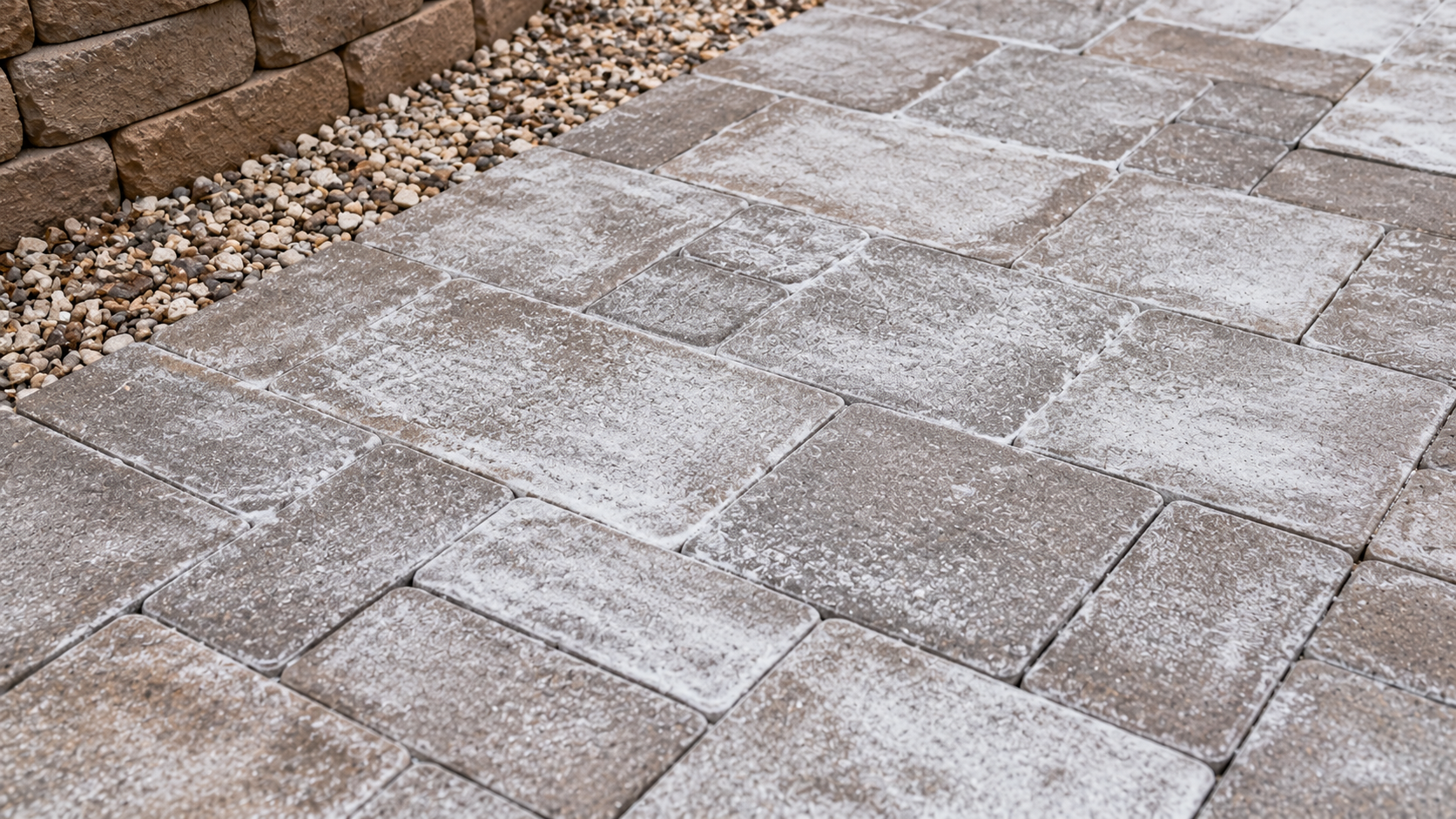
You install a beautiful new paver patio, and a few weeks later, a chalky white haze shows up across it like dried salt. It's alarming — it looks like the pavers are damaged or defective — but efflorescence is one of the most common and best-understood things that happens to concrete pavers and natural stone. The white isn't damaged; it's the salts that carry out the moisture. Understanding how it forms tells you why it's usually no big deal and how to clear it.
What the White Haze Actually Is
Efflorescence is a deposit of water-soluble salts that occur naturally inside concrete pavers, mortar, and many stones. On their own, those salts sit harmlessly in the material. The haze appears when moisture gets involved: water inside or moving through the paver dissolves the salts, carries them to the surface as the paver dries, and then evaporates — leaving the salts behind as a white, powdery film. The water leaves; the salt stays.
For it to happen, three things must be present at once: soluble salts in the material, moisture to dissolve them, and a path for the salty water to reach the surface. That's the whole mechanism, which is why efflorescence is really a sign of normal moisture movement, not a defect.
Why It's So Common on New Pavers
Fresh concrete pavers carry extra moisture and free salts from manufacturing, so the first drying cycles push those salts to the surface. This "new paver bloom" is completely normal and shows up on a huge share of new installations. The reassuring part is that this initial efflorescence is self-limiting: once the readily available salts have worked their way out, it fades, and many new patios clear up substantially on their own over the first several months to a year as rain and weathering rinse the surface.
Recurring efflorescence — haze that keeps coming back long after installation — is a different signal. It means moisture keeps moving through the pavers, usually from a water source like poor drainage, irrigation, or constant dampness underneath.
Is It Harmful?
For the most part, no. Efflorescence is a cosmetic surface deposit, not structural damage, and it doesn't weaken pavers or stone. The real message is about moisture: because it only appears where water is moving through the material, persistent efflorescence is worth tracing to its water source. There's also a tougher, less common variety sometimes called calcium or "hard" efflorescence that forms a more stubborn crust and needs a proper cleaner rather than simple brushing.
How to Clear It
| Method | Best for | Notes |
|---|---|---|
| Let it weather | New-paver bloom | Often fades over the first year |
| Dry brushing | Light, fresh haze | Stiff brush on a dry day; avoid adding water |
| Water rinse and scrub | Moderate haze | Rinse thoroughly so salts run off, not back in |
| Efflorescence/masonry cleaner | Stubborn or hardened deposits | Use a product made for pavers; follow directions |
Start with the gentlest approach. For new pavers, simply waiting often does most of the work as the bloom self-limits. Light, fresh efflorescence usually comes off with a stiff dry brush — and dry is best, because adding water can redissolve the salts and carry them back into the paver to bloom again. For more, washing and scrubbing work if you rinse thoroughly so the dissolved salt runs off rather than soaking back in. Stubborn or hardened deposits call for an efflorescence cleaner made for masonry or pavers, used carefully per the label, since the wrong product or concentration can affect the surface. If you plan to seal pavers, make sure the efflorescence is fully cleared, and the pavers are dry first, or you can lock the haze in.
How to Keep It From Coming Back
Since efflorescence needs moisture, lasting prevention is about controlling water. Make sure the patio drains properly, and water sheds off and away rather than sitting under the pavers, keep sprinklers from constantly wetting the surface, and address any drainage that channels water beneath the field. A breathable paver sealer can also help reduce efflorescence and make future haze easier to clean — but only once the surface is clean and dry, and only with a product meant for pavers so moisture can still escape. Solve the moisture, and the white haze stops reappearing, because you've removed the one ingredient it can't form without.
Frequently Asked Questions
Is efflorescence a sign my pavers are defective?
No. Efflorescence is a natural, extremely common reaction in concrete pavers and stone — salts inside the material brought to the surface by moisture. It's especially common on new pavers and is cosmetic, not a defect or structural damage. Most new-paver bloom fades on its own within the first year as the available salts work out and weathering rinses the surface.
Will the white haze on my new pavers go away on its own?
Usually, yes. The efflorescence on new pavers is self-limiting — once the free salts from manufacturing have surfaced and washed away, it fades, and many patios clear up substantially over the first several months to a year. You can speed it along with dry brushing or a paver cleaner. If it keeps returning long after installation, that points to an ongoing moisture source to address.
How do I remove efflorescence from pavers?
Start gentle: dry-brush light, fresh haze with a stiff brush (dry is better, since water can redissolve the salts). For more, wash and scrub, rinsing thoroughly so the salty water runs off rather than soaking back in. Stubborn or hardened deposits need an efflorescence cleaner made for pavers, used per the label. Always clear and dry pavers fully before sealing them.
Why does efflorescence keep coming back?
Because moisture keeps moving through the pavers. Efflorescence forms only when water dissolves salts and carries them to the surface, so recurring haze means there's an ongoing water source — poor drainage, irrigation hitting the pavers, or water flowing under the field. Cleaning treats the symptom; controlling the moisture (drainage, sprinklers, grading) is what stops it from returning.
Should I seal pavers to prevent efflorescence?
Sealing can help reduce efflorescence and make future haze easier to clean, but only after the surface is fully cleaned and dry — sealing over efflorescence can lock it in. Use a breathable sealer made for pavers so moisture can still escape; a non-breathable coating can trap moisture and cause problems. Controlling drainage and water is the bigger factor; sealing is a helpful supporting step.
The Haze Is Salt, Not Damage
Efflorescence looks worse than it is. That white film is natural salts riding moisture to the surface of your pavers — common, cosmetic, and on new installations, usually temporary. Clear it with the gentlest method that works, hold off on sealing until it's gone and the pavers are dry, and treat persistent haze as a cue to fix where water is getting into the pavers. Remove the moisture, and you remove the one thing efflorescence needs. And remember the timeline: on brand-new pavers, a little patience often does most of the work, since that first bloom is the material simply shedding its built-in salts.
Picking out new pavers or stone for your project? — Get quality materials and straight answers on care and finishing. North Valley Stone Supply LLC serves Phoenix, Scottsdale, Tempe. Call (623) 244-8657.