
Sealed vs Unsealed Pavers: Which Is Right for a Desert Yard?
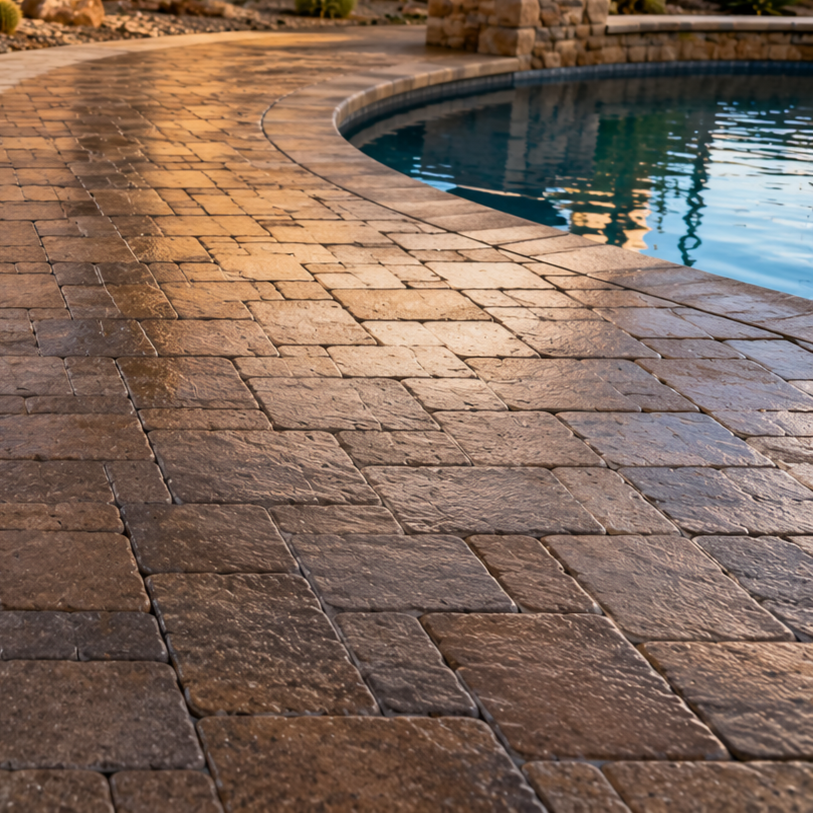
Once your pavers are in, the next question is whether to seal them — and there are good arguments on both sides. Sealing isn't required for pavers to function, but it affects how they look, how well they resist stains, and how much maintenance they require. In Arizona's sun, around pools, and under monsoon runoff, that trade-off plays out a bit differently than in milder climates. Here's how to decide.
What Sealing Actually Does
A paver sealer is a protective coating applied over the pavers and joints. It does several things at once: it makes the surface more resistant to stains and spills, helps lock the joint sand in place so it doesn't wash out as easily, can enhance or deepen the pavers' color, and makes routine cleaning easier. Depending on the product, it leaves either a natural matte finish or a slight sheen. What it doesn't do is last forever — sealer wears with sun, traffic, and weather, so it needs reapplying periodically.
The Case for Sealing
In a desert backyard, sealing earns its keep in a few ways. Pool decks and patios see spills, sunscreen, food, drinks, and pool chemicals, and a sealed surface resists staining and wipes up far more easily. Sealing also helps hold joint sand against monsoon washout, which keeps pavers locked together and reduces the weeds and ants that move into empty joints. And it can bring out the pavers' color, which some homeowners love for a richer look. The trade-offs: it's an added step with ongoing maintenance (reapplication every few years), and it has to be applied to clean, dry, efflorescence-free pavers — sealing over moisture or haze can trap problems.
The Case for Leaving Them Unsealed
Unsealed pavers are the lower-maintenance route. There's no coating to reapply, no risk of a sealer going wrong, and the pavers keep their completely natural, matte appearance, which suits some styles better. Many pavers perform perfectly well unsealed for years. The downside is that unsealed pavers absorb spills and stain more readily, joint sand washes out faster without the sealer helping hold it, and cleaning is a little more work. For low-traffic, low-stain areas, that can be an acceptable trade; for a busy pool deck, it's more of a compromise.
| Factor | Sealed | Unsealed |
|---|---|---|
| Stain resistance | Higher; spills wipe up | Lower; absorbs more |
| Joint sand | Better held in place | Washes out faster |
| Color | Enhanced/deepened | Natural matte |
| Cleaning | Easier | More effort |
| Maintenance | Reapply every few years | None for the coating |
| Best for | Pools, patios, high-use areas | Low-traffic, natural-look spots |
Which Fits a Desert Backyard
It comes down to use and look. For pool decks, patios, outdoor kitchens, and any high-traffic or stain-prone area, sealing is usually worth it in Arizona — the stain resistance, easier cleanup, and joint-sand protection against monsoon washout pay off, as long as you accept reapplying the sealer every few years. For low-traffic paths, side yards, or anywhere you prefer a raw, natural look with minimal maintenance, leaving pavers unsealed is a reasonable choice.
Two desert-specific notes. First, timing matters: pavers should be fully clean, dry, and past their initial efflorescence bloom before sealing, or you can lock haze in — so new pavers often wait before their first seal. Second, choose the right product and finish: a breathable sealer made for pavers lets moisture escape, and a matte or natural-look sealer avoids a glossy, slippery surface around pools. Whichever route you choose, matching the decision to how you actually use each area is what makes it right.
It can also be a mix rather than an all-or-nothing call. Many homeowners seal the pool deck and main patio — the spots most exposed to spills, sunscreen, and heavy use — while leaving a side-yard path or a low-traffic border unsealed for simplicity. There's nothing wrong with treating different areas differently based on how each one gets used. The point is to be deliberate: decide which surfaces face the most staining and washout risk, protect those, and don't over-maintain the ones that don't need it.
One more thing worth weighing is the look you're after. A sealer can deepen the pavers' color for a richer, slightly wet appearance, or stay matte to keep things natural — so the choice affects aesthetics, not just protection. If you love the raw, dry look of the stone, that may tip you toward unsealed or a strictly matte product; if you want the color to pop, an enhancing sealer delivers that while adding the stain resistance.
Frequently Asked Questions
Do pavers need to be sealed?
No, sealing isn't required for pavers to function — many perform well unsealed for years. Sealing is an optional upgrade that adds stain resistance, helps hold joint sand, enhances color, and makes cleaning easier, in exchange for periodic reapplication. Whether it's worth it depends on the area: high-use and stain-prone spots like pool decks benefit most, while low-traffic areas can be fine unsealed.
What are the benefits of sealing pavers?
Sealing makes pavers more resistant to stains and spills, helps lock joint sand in place so it washes out less (useful against monsoon runoff), can deepen or enhance the color, and makes routine cleaning easier. Around pools and patios, that means spills, sunscreen, and pool chemicals are far less likely to leave marks. The trade-off is reapplying the sealer every few years.
How often do sealed pavers need to be resealed?
Sealer wears down over time from sun, traffic, and weather, so it needs reapplying periodically — typically every few years, though the exact interval depends on the product, the amount of use, and sun exposure. High-traffic, full-sun desert areas may need it more often. A faded look or pavers absorbing water again are signs it's time to reseal.
Can you seal new pavers right away?
It's usually best to wait. New pavers carry extra moisture and free salts that surface as efflorescence (white haze), and sealing over that can lock it in. Let new pavers fully dry and let the initial efflorescence clear or be cleaned off first, then seal clean, dry pavers. Using a breathable, paver-specific sealer also lets remaining moisture escape.
Is sealing pavers around a pool a good idea?
Generally yes, with the right product. Sealing helps a pool deck resist stains from sunscreen, food, drinks, and pool chemicals, and makes cleanup easier, and it helps hold joint sand against splashing and runoff. Just choose a matte or natural-finish, slip-conscious sealer made for pavers so the deck doesn't become glossy or slippery, and reapply it as it wears.
Seal Where It Counts, Match It to Your Yard
Sealing pavers isn't all-or-nothing — it's a trade-off you can apply where it makes sense. Seal the pool deck, patio, and high-use areas for stain resistance, easier cleaning, and joint-sand protection against monsoon washout, accepting the reapplication every few years. Leave low-traffic, natural-look spots unsealed if you'd rather skip the upkeep. Wait until new pavers are clean, dry, and past their efflorescence bloom, pick a breathable matte sealer for any wet area, and the decision will fit your desert backyard well.
Picking pavers and weighing whether to seal? — Get quality pavers and guidance on finishing for the Arizona climate. North Valley Stone Supply LLC serves Phoenix, Scottsdale, Tempe. Call (623) 244-8657.