
Why Your Patio Pavers Shift and Go Uneven Over Time
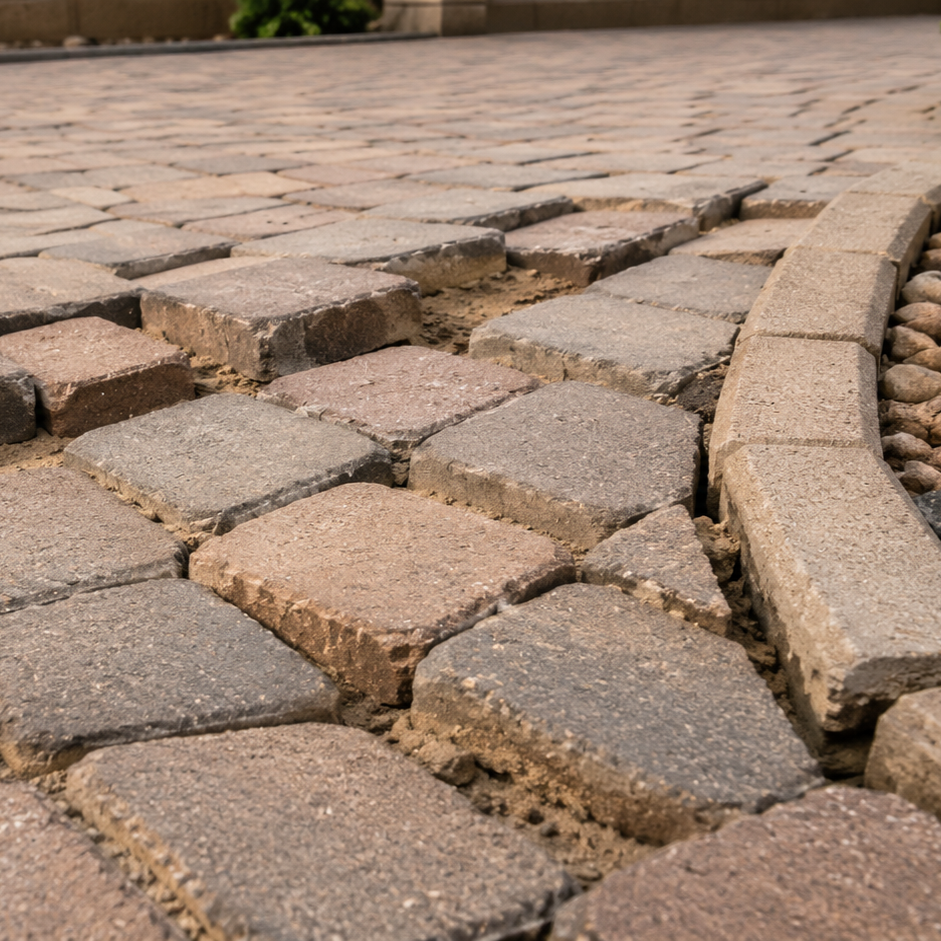
A paver patio that's gone wavy — drinks sliding toward a low corner, edges creeping apart, a lip you catch your toe on — is frustrating because the pavers themselves usually look fine. That's the clue: pavers don't fail, the base under them does. Once you understand that pavers are only as stable as what they sit on and what holds them in place, both the cause and the fix make sense.
Pavers Are Only as Good as Their Base
A paver patio is a system: a compacted base of crushed stone, a thin setting layer of sand, the pavers themselves, edge restraints around the perimeter, and joint sand locking it all together. When pavers shift or sink, one of those layers has failed — most often the base or the edges. The pavers are just riding on top, so they go wherever the layers beneath them move.
The Common Causes
A Weak or Poorly Compacted Base
This is the root of most paver problems. If the crushed-stone base wasn't deep enough or wasn't compacted properly during installation, it settles unevenly over time, and the pavers dip and sink with it. A solid, well-compacted base is what keeps a patio flat for years; a shortcut there shows up as waviness later.
Missing or Failed Edge Restraints
The edges of a paver field need a restraint — a border that holds the outer pavers from spreading outward. Without it, or when it fails, the pavers along the edges slowly migrate apart, joints widen, and the whole field loosens and shifts. Many "spreading" patios are directly due to inadequate edge restraint.
Joint Sand Washing Out
The sand in the joints between pavers isn't just filler — it locks the pavers together so they share load and don't move independently. When that sand washes out (from rain, runoff, or pressure washing), the pavers lose their interlock and start to wobble, tilt, and shift. Empty joints also let weeds and ants in, which worsens the problem.
Water and Poor Drainage
Water is the enemy of a paver base. Poor drainage, downspouts dumping onto the patio, or runoff flowing under the pavers erodes and undermines the base, creating voids that the pavers then sink into. In Arizona, monsoon downpours can move a lot of water fast, so drainage and grading matter even in a dry climate.
Soil Movement
The ground itself shifts — expanding and contracting with moisture changes, or settling over time — and that movement telegraphs up through the base into the pavers. Tree roots can lift and tilt pavers as well.
| What you notice | Likely cause | What it points to |
|---|---|---|
| Pavers dip or sink in spots | Weak/poorly compacted base | Base re-leveling |
| Edges spreading, joints widening | Failed edge restraint | Reinstall edge restraints |
| Pavers wobble or tilt | Joint sand washed out | Refill with polymeric sand |
| Low spots where water pools | Drainage eroding the base | Fix drainage and base |
| Lifted, tilted pavers near trees | Root intrusion or soil movement | Address roots; re-level |
How It's Fixed and Prevented
Because the trouble is underneath, the lasting fix is base and edge work, not just rearranging pavers. Sunken areas are corrected by lifting the affected pavers, repairing and properly compacting the base back to level, and resetting them. Spreading edges need solid edge restraints reinstalled. And the joints should be refilled — polymeric sand is worth using because it hardens to resist washout, weeds, and ants far better than plain sand. Fixing drainage so water flows off and away from the patio, rather than under it, protects the base going forward.
For a small, isolated low spot, re-leveling a few pavers can be a manageable project. But widespread shifting, spreading edges, or a patio that keeps going uneven points to a base or drainage problem that needs proper correction to actually hold — otherwise the waviness just comes back.
It's also worth catching the problem early. A patio that's just started to show a slight dip or a joint opening up is far easier and cheaper to correct than one that's been left to spread, because the longer pavers move, the more sand escapes and the more the base erodes — each feeding the next. Walking the patio after the first big monsoon storm of the season, topping up joint sand before it's fully gone, and keeping downspouts aimed away from the field are small habits that head off the bigger re-leveling jobs. A paver patio is truly a long-term surface when the base and edges are sound; most of the trouble people blame on the pavers is really deferred maintenance underneath them.
Frequently Asked Questions
Why is my paver patio sinking in certain spots?
Almost always because the base underneath has settled or eroded there. If the crushed-stone base wasn't compacted well or deep enough, or if water has washed out part of it, voids form and the pavers sink into them. The pavers themselves are fine — the fix is lifting them, repairing and compacting the base back to level, and resetting them.
What are edge restraints, and why do they matter?
Edge restraints are borders installed around the perimeter of a paver field that hold the outer pavers from spreading outward. They're essential: without them, or when they fail, the edge pavers slowly migrate apart, joints widen, and the whole patio loosens and shifts. Many spreading, shifting patios trace directly to missing or failed edge restraint, so reinstalling it is often key to a lasting fix.
Why does the sand keep washing out of my paver joints?
Joint sand washes out from rain, runoff, irrigation, or pressure washing, and once it's gone, the pavers lose their interlock and start to wobble and shift. Plain sand washes out easily; polymeric sand, which hardens after it's installed, resists washout, weeds, and ants much better. Refilling the joints — ideally with polymeric sand — restores the lock between pavers.
Can poor drainage cause pavers to become uneven?
Yes. Water is the main enemy of a paver base. Poor drainage, downspouts emptying onto the patio, or runoff flowing beneath the pavers erodes the base and creates voids that the pavers sink into. Even in dry Arizona, monsoon downpours move a lot of water quickly. Correcting grading and drainage so water sheds off and away from the patio protects the base from washing out.
Is a shifting paver patio worth repairing?
Usually yes, because the pavers themselves are typically still good — the problem is the base or edges, which can be repaired. Re-leveling on a properly compacted base, reinstalling edge restraints, and refilling joints restores a patio for far less than a full replacement. The key is fixing the underlying base and drainage; otherwise, the unevenness returns no matter how many times the pavers are reset.
Fix What's Underneath, Not Just the Surface
A paver patio goes uneven because the system beneath it — the base, the edges, the joint sand, the drainage — has shifted, not because the pavers wore out. That's good news: it means the pavers are usually reusable, and the fix is correcting the foundation. Re-level on a well-compacted base, lock the perimeter with edge restraints, refill the joints with polymeric sand, and send water away from the patio. Get the layers under the pavers right, and the surface stays flat for years.
Planning a paver patio or replacing failing ones? — Get quality pavers and the right base materials for a patio that stays level. North Valley Stone Supply LLC serves Phoenix, Scottsdale, Tempe. Call (623) 244-8657.