
Why Does Fire Glass Fade or Discolor Outdoors? Normal Wear Explained
What Fire Glass Is Actually Made Of
Fire glass starts as tempered glass, heat-treated so it can withstand the heat of a gas flame without cracking or exploding the way ordinary glass would. Manufacturers crush or tumble that tempered glass into small, rounded pieces, then either leave the color running through the glass itself or apply a thin reflective coating to the surface for a metallic shine and a more vivid glow when the flame hits it.
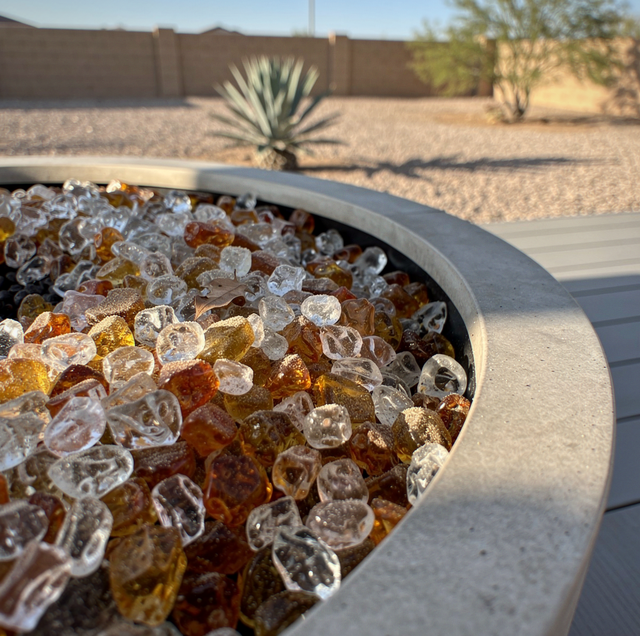
That distinction matters more than most buyers realize. Color-through glass carries its pigment all the way through the piece, just like a colored bottle. Reflective glass gets its color and shine from a coating bonded onto the outside of an otherwise clear or lightly tinted piece. Both types are built to handle direct flame contact, but they don't age the same way once they're sitting in a fire bowl or pit under open sky for months or years at a stretch.
How Heat and Sun Exposure Change Fire Glass Over Time
Tempered glass itself does not fade from sun exposure the way fabric or painted wood does. Glass is an inorganic material with no dye or pigment for ultraviolet light to break down, which is why a piece of color-through fire glass tends to hold its hue about as well as a window pane holds its clarity. What changes over time is everything sitting on or around that glass.
Intense sun and heat exposure bake dust, pollen, and airborne debris onto the surface of fire glass day after day, and that thin film is often what people mistake for the glass itself losing color. A reflective coating is more vulnerable to the sun than the glass beneath it, since prolonged UV and heat exposure can slowly dull a metallic finish, much like how sun exposure dulls a painted surface over years outdoors. The coating is a thin, bonded layer, not a solid material all the way through, so it has less to give before it starts to look tired.
Heat plays its own separate role. Every time you light the fire feature, the glass closest to the flame heats up fast, then cools back down once the burner shuts off. That repeated heating-and-cooling cycle, known as thermal cycling, is harder on any surface coating than steady heat alone would be, since expansion and contraction stress the bond between the coating and the glass underneath it with every use.
Thermal Cycling and Soot: The Other Half of the Story
Sun and heat exposure explain part of what you see, but combustion byproducts explain the rest. Gas flames, especially from a burner that isn't tuned correctly or is burning fuel with higher impurities, can leave a light soot or carbon residue on nearby glass. That residue often looks gray or smoky rather than colorful, and it settles unevenly, heavier near the flame ring and lighter toward the edges of the bowl or pit.
Moisture adds a third factor. Sprinkler overspray, rain, or a garden hose rinse can leave mineral deposits behind once the water evaporates, similar to the hard-water film that forms on pool tile or shower glass. On light-colored or clear fire glass, that mineral film can look like a cloudy haze rather than a dirt layer, and it's one of the most common reasons homeowners assume their glass has gone bad when it's really just carrying a coating of dried minerals.
Put those three forces together- sun and heat on any coating, thermal cycling from repeated use, and residue from soot or water- and you get the dulled or discolored look that shows up on fire glass after a season or two of regular use, no matter where the fire feature sits.
What Counts as Normal Wear
A gradual softening of shine on reflective fire glass after months of steady use is expected, not a defect. The same goes for a light dusty film that wipes away with plain water and a soft cloth, or slight color variation between pieces from different production batches, since fire glass isn't manufactured to paint-match perfection the way a single sheet of tile might be.
It's also normal for the glass closest to the burner ports to show a bit more wear than the glass farther out, since that area receives the most direct heat with every use. A very light haze that returns a few weeks after cleaning, especially near sprinklers or in spots that catch a lot of blown dust, usually points to environmental residue rather than a problem with the glass itself.
Signs That Point to Lower-Quality Glass
Some changes go beyond ordinary wear and instead point to a glass product that wasn't designed for long-term outdoor use in a fire feature. Watch for a reflective coating that flakes or peels off in visible patches rather than fading evenly, since that's a sign the coating wasn't properly bonded or rated for repeated flame contact.
Uneven yellowing or browning that appears on some pieces but not others, especially away from the direct heat zone, can indicate a lower-grade glass reacting to combustion byproducts more than a higher-grade glass would. Cracking, popping, or small chips that appear with normal use are a bigger concern than discoloration on its own, since they usually mean the glass wasn't tempered correctly for gas fire pit temperatures in the first place. A cloudy haze that won't come off with a mild household glass cleaner and a soft brush, after you've ruled out mineral buildup, is also worth a closer look, since it can mean the surface itself has been etched or pitted rather than just coated in residue.
How to Slow Down Fading and Clouding
Choosing the right glass for the spot matters as much as anything you do afterward. Color-through glass tends to hold its original look longer in a full-sun installation than reflective-coated glass, simply because there's no separate coating layer for sun and heat exposure to work on over the years. If you want the extra shine that a reflective finish gives off, expect to refresh or top off that glass sooner than you would color-through glass in the same spot.
Where you place the fire feature also plays a role. Positioning it away from sprinkler heads and heavy overspray reduces the mineral film that builds on fire glass over time, and a spot with at least some wind protection reduces how much dust and pollen settle on the surface between uses. A properly fitted cover for the bowl or pit when it's not in use keeps rain, dust, and direct sun off the glass during the many hours it isn't burning, which is most of its life.
Burner maintenance matters too. A gas burner that's clean and correctly adjusted burns more completely and leaves less soot behind on the glass around it, so a periodic check of the burner ports and gas line connections pays off in both appearance and safety.
Cleaning and Maintenance That Extend Color Life
Routine cleaning is the single biggest lever you have for keeping fire glass looking close to new. Rinse the glass with plain water every few weeks during regular use, and follow up with a soft brush or cloth on any spots holding onto dust or soot, since letting residue bake onto hot glass repeatedly makes it noticeably harder to remove later on.
Avoid abrasive scrubbers or gritty cleaning powders, particularly on reflective glass, since scratching through the coating permanently removes it in that spot rather than just cleaning it. A mild dish soap and water solution handles most everyday grime, and a diluted vinegar rinse can help lift mineral film from hard water without harming the glass underneath, though it's worth testing a small, inconspicuous area first on any coated piece. Let the glass air dry fully before relighting the fire feature, since trapped moisture can cause pieces to pop or crack when they heat up too quickly.
Give the whole bed a deeper clean once or twice a year, removing the glass, rinsing it thoroughly away from the fire feature, and checking the burner and base underneath for any debris that's collected out of sight.
When Replacement Makes Sense
Fading and mild clouding that responds to cleaning doesn't call for replacement, just upkeep. Replacement starts to make sense once a reflective coating has visibly flaked away in multiple spots, once cracking or popping appears during normal use, or once a haze persists after cleaning and indicates pitting or etching in the glass rather than surface residue.
Some homeowners also replace fire glass simply to refresh a color scheme or switch from a reflective finish to color-through glass for better long-term performance in a sun-heavy spot. Either way, there's no need to swap out an entire bed at the first sign of dust or dulling. Give it a proper cleaning first, and base the replacement decision on how the glass looks and performs after that cleaning rather than on its appearance before you've touched it.
Frequently Asked Questions
How long does fire glass typically last before it needs replacing?
There's no fixed lifespan, since it depends on the type of glass, how often the fire feature runs, and how exposed the spot is to sun, water, and blown debris. Color-through glass in a well-maintained setup can go for many years without needing a full swap, while reflective glass in a high-use, high-exposure spot may need attention sooner.
Can I mix new fire glass with older, faded glass in the same feature?
You can, and many people do, to extend a bed's life without a full replacement. Just expect a visible difference in shine or color between the new and older pieces at first, which tends to blend in somewhat as the newer glass picks up some age of its own.
Does the type of fuel affect how fast fire glass discolors?
It can. A burner running rich or on a fuel source with more impurities tends to leave more soot on nearby glass than a clean-burning, well-tuned setup, so keeping the burner serviced helps as much as the glass choice itself.
Is it safe to use regular glass cleaner on fire glass?
A mild, non-abrasive glass cleaner or plain dish soap and water is generally fine for routine cleaning. Skip anything abrasive or gritty, especially on reflective pieces, since scrubbing can wear through a coating in that exact spot.
Should fire glass be removed and stored during long stretches of non-use?
It doesn't need to be removed, but a fitted cover over the bowl or pit protects it from sun, dust, and rain during idle stretches, which is usually most of the year for a fire feature that only runs occasionally.
Why does glass near the burner ports look more worn than glass at the edges?
That area takes the most direct, repeated heat each time the fire feature runs, so it undergoes more thermal cycling than glass farther from the flame. That uneven wear pattern is expected and isn't a sign of a defective batch.
Compare fire glass colors and finishes in person — bring a photo of your fire feature and get help picking a finish built to hold up in full sun. North Valley Stone Supply LLC serves Phoenix, Scottsdale, and Tempe. Call (623) 244-8657.