
Why Does My Stacked Stone Wall Look Faded and Washed Out?
A stacked stone wall that looked rich and layered on installation day can turn pale and flat within a few years, and the change often happens slowly enough that no single day stands out. One season it looks the same as always, and a few years later the color that used to jump off the surface reads as dusty and gray instead. That shift is not damage in the structural sense. It is a slow chemical and physical process driven mostly by sun exposure, and understanding how it works is the first step toward deciding whether a wall needs cleaning, resealing, or a harder look at replacement.
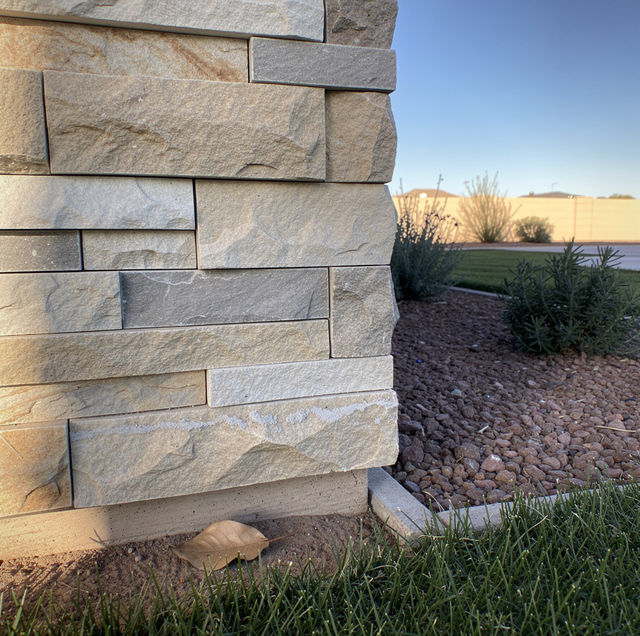
How Years of Sun Exposure Fade Stacked Stone
Every stacked stone wall sits under direct sun for a large share of daylight hours, and ultraviolet light carries enough energy to break chemical bonds in whatever gives the stone its color. That breakdown happens at the molecular level, one bond at a time, which is why fading almost never shows up overnight. It builds across seasons of exposure until the cumulative effect finally becomes obvious to the eye.
Heat adds a second layer to the process. Repeated cycles of daytime heating and nighttime cooling stress the outermost surface of any stone product, whether natural or manufactured, and that stress can open tiny surface pores over time. Those pores let more UV light reach the pigment or mineral content sitting just below the surface, which accelerates the same fading process that sun exposure was already driving on its own.
The two effects compound each other. Heat exposure roughens the surface just enough to expose more color to UV light, and UV light keeps breaking down that color a little more with each passing year. A wall facing full sun for most of the day fades noticeably faster than one that gets partial shade from a roofline, a tree, or a neighboring structure, since total UV dose over the years is what drives the change, not any single hot afternoon.
Natural Stone vs. Manufactured Veneer: Two Different Fading Stories
Not all stacked stone fades the same way, and the difference comes down to where the color actually lives in the material. Natural stone gets its color from minerals embedded throughout the rock itself, formed over geologic time, so the color runs the full depth of the piece rather than sitting on the surface. That mineral-based color generally resists UV breakdown far better than a manufactured pigment does, which is why a natural stone wall tends to hold its original tone longer than a manufactured veneer wall exposed to the same conditions.
Manufactured or cultured stone veneer works differently. It starts as a cement-based mix cast in molds, with color added during production either mixed through the batch or applied as a surface stain during the finishing process. That added pigment is a synthetic compound designed to mimic natural stone coloring, and synthetic pigments break down more readily under UV exposure than natural mineral content does. A veneer piece with color mixed throughout the full mix ages a bit more gracefully than one with color applied only to the surface, since there is more pigment available beneath the top layer as it weathers. A surface-stained piece has the least reserve, since once that thin colored layer fades, there is no additional pigment underneath to carry the look.
This does not mean natural stone never fades or that manufactured veneer always looks bad after a few years. It means the two materials fade through different mechanisms and at different rates, and knowing which one a wall is built from changes what restoration options make sense later.
Why Sealing Makes a Real Difference
A sealer acts as a barrier between the stone surface and the elements working against it, including UV light, moisture, and airborne dust. On both natural stone and manufactured veneer, a quality sealer blocks a meaningful share of UV penetration into the surface layer, slowing the rate at which color-bearing minerals or pigments break down beneath it.
Sealing also closes off some of the tiny surface pores that heat cycling tends to open over time. A sealed surface sheds water and dust more effectively than an unsealed one, and that matters because dust and mineral film sitting on the surface for long stretches can make a wall look faded even before any actual color loss has occurred. Some of what reads as fading is really a buildup of light-colored residue sitting on top of stone that has held its color reasonably well underneath.
The tradeoff is that sealers wear out. A sealer applied years ago and never refreshed may still be doing some work, but its UV protection and water resistance gradually decline with exposure, and a wall with a failed or worn sealer will fade toward the rate of an unsealed wall from that point forward. A wall that has never been sealed at all is working without any protective layer, which is why unsealed installations in full sun tend to show visible color change sooner than sealed ones built from the same stone.
Can a Faded Wall Be Restored, or Does It Need Replacement?
Most faded stacked stone walls do not need to come down. The right fix depends on what is actually causing the faded look, which is worth figuring out before committing to any repair.
Start with a cleaning. A significant share of what looks like fading is really dust, mineral deposits, or a thin film of grime sitting on the surface, and a proper cleaning with the right solution for the stone type often brings back more color than expected. Skip anything acidic or abrasive on natural stone with a sensitive finish, since the wrong cleaner can etch or dull the surface further rather than restoring it. A test patch in an inconspicuous spot is worth the extra step before treating the whole wall.
If cleaning alone does not restore the color, resealing is the next step. A fresh sealer restores some surface depth and richness on its own by changing how light reflects off the stone, and it also protects whatever color remains from breaking down further. This works best when the underlying stone or veneer still has usable color reserves; a sealer cannot restore pigment that has already broken down completely, only slow further loss and add some visual depth back to what is left.
For a wall where the fading has gone past what cleaning and sealing can address, a color-enhancing stain or restorative coating is the next option before considering replacement. These products add pigment back to the surface rather than relying on what remains in the stone, and they work reasonably well on both natural stone and manufactured veneer, though results depend heavily on matching the product to the specific material and existing color.
Replacement makes sense mainly when fading is accompanied by other problems: cracking, spalling, mortar joint failure, or pieces that have become structurally loose. Color alone, even significant fading, rarely justifies tearing out a wall that is otherwise sound. A cleaning and sealing pass, done properly, resolves most faded-wall complaints without any demolition.
Choosing More Fade-Resistant Stone for a Future Project
For anyone planning a new stacked stone wall or replacing sections of an existing one, the fading lessons above point to a few practical choices up front. Natural stone with color running through the full depth of the material holds its look longer under sustained sun exposure than a manufactured veneer with surface-applied pigment, simply because there is more color available to lose before any change becomes visible.
Within manufactured veneer, a through-body colored product outperforms a surface-stained one for the same reason natural stone outperforms both: more pigment sits below the surface, available as the outer layer gradually weathers. Ask directly whether a given veneer product's color runs through the mix or sits only on the surface, since that single detail predicts a lot about how the wall will look after several years outside.
A sealer applied at installation, and refreshed on a regular schedule afterward, extends the useful life of whatever color a stone or veneer product starts with. Building that maintenance step into the plan from day one costs far less effort than restoring a wall that has gone years without any protection. Finally, orientation matters: a wall facing full sun for most of the day will always fade faster than one with some shade from a structure or mature planting nearby, so placement is worth a second look for anyone who wants a wall to hold its color with minimal upkeep.
Frequently Asked Questions
How long does it typically take for a stacked stone wall to show visible fading?
There is no fixed timeline, since it depends on the stone or veneer type, how much direct sun the wall receives, and whether it was sealed at installation. A sealed natural stone wall in a partly shaded spot may show little change for many years, while an unsealed, surface-stained veneer wall in full sun can look noticeably paler within a shorter stretch.
Is faded stacked stone a sign of a bad installation?
Not usually. Fading is largely a property of the material and its exposure to sunlight over time, not a sign that the wall was built incorrectly. A poor installation shows up as cracking, loose stones, or mortar failure, which are separate issues from gradual color change.
Can I match new stone to an existing faded wall for a repair section?
It is possible but takes some care, since new stone or veneer will look noticeably different in color and finish next to a section that has already faded for years. Many homeowners accept a visible transition at first, knowing the new section will gradually weather closer to the surrounding tone over time.
Does the direction a wall faces affect how fast it fades?
Yes. A wall facing the sun for most of the day accumulates far more total UV exposure over a year than a wall that gets partial shade from a structure, roofline, or nearby planting, and that difference in total exposure is the main driver of how quickly color changes.
Will a dark-colored stacked stone wall fade faster than a lighter one?
Often, yes. Darker, more saturated colors tend to show fading more visibly than muted or lighter tones, partly because the contrast between the original color and the faded version is easier to notice, and partly because darker pigments can absorb more solar energy at the surface.
How often should a stacked stone wall be resealed to protect against fading?
It depends on the sealer product, the stone type, and sun exposure, but many sealers are rated for a few years before their UV and water protection meaningfully declines. Checking how water beads on the surface is a simple way to gauge whether a sealer is still doing its job or due for a refresh.
Bring a photo of your faded stacked stone wall in for a look — get help figuring out whether cleaning, resealing, or a stone swap makes the most sense. North Valley Stone Supply LLC serves Phoenix, Scottsdale, and Tempe. Call (623) 244-8657.