
Checking a Stone Paver Pallet on the Day Your Delivery Arrives
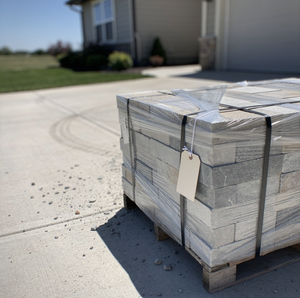
A pallet of natural stone pavers is more than a stack of stone. It carries a single stone type, cut to a single size, finished in one way, banded together in a set count, and sold within a color range. Every one of those details was set before the pallet ever left the yard, which means the day it lands in a driveway or a side yard is the easiest point in the whole project to confirm them all. Once the wrap comes off and pieces start moving toward the base, a mismatch is harder to isolate and easier to blame on the wrong stage of the job.
A short walk around the pallet before it is touched matches each part of the order to what arrived, and it flags anything worth writing down while the delivery is still fresh.
| Check | What It Confirms | If It Doesn't Match |
|---|---|---|
| Pallet tag against the order | The stone, size, finish and count match what was ordered | Note it on the delivery paperwork and call the yard before any piece is used |
| Corners and edges, top and side rows | The outer pieces survived transport without chips or cracked corners | Set damaged pieces aside for a cut spot later; note anything worse on the paperwork |
| Finish and fill | The surface texture, and for travertine whether the holes are open or filled, matches the order | Note it and call the yard before the installer starts on the wrong finish |
| Color spread across the pallet | The tone range on the pallet fits the stone that was ordered | A spread wider than the order describes goes on the paperwork; the yard can advise before installation begins |
| Banding and wrap | The pallet arrived intact, with nothing loosened or shifted in transit | Banding cut or loose before arrival gets noted, since it can mean pieces moved inside the stack |
| Where the pallet was set down | It's on a stable, dry spot off bare ground | A pallet set on wet or uneven ground goes on the paperwork and into the call to the yard |
Reading the Order Against the Pallet Tag
The tag zip-tied or stapled to a pallet is a quick check before a single stone is lifted. It can name the product, the size, the finish, and the piece count, and reading it against a copy of the order, line by line, catches a swapped size or finish long before anyone has carried a piece to the base.
A tag that reads correctly still describes the pallet as it was built, and pieces can shift or break between the yard and the drop, which is why the rest of the walk-through still matters when the paperwork checks out on the first pass.
On an order that ships as more than one pallet, each pallet carries its own tag, and reading only the first one and assuming the rest match is where a mix-up slips through. A large order can pull stone from more than one run at the yard, so the count, size, and finish on a second or third pallet are worth reading on their own rather than skimming them against memory of the first.
Chips, Cracks and Broken Pieces
Natural stone travels by truck, is set down by a forklift or pallet jack, and endures more handling before it ever reaches a base. Some edge wear is ordinary for a material this heavy, and a light chip on a corner that will be cut or set against another piece can go into the job as it is. A crack running through a piece, or a corner broken clean off a face that will show once it's laid, is a different matter and is worth pulling aside before the pallet is broken down further.
Look most closely at the top course and the outer rows first, since those pieces sit against the strapping and take any shifting during the ride over, then spot-check a few pieces deeper in the stack. A handful of scattered chips across a large pallet reads differently from several pieces damaged in one corner of the stack, which matches one hard knock during handling.
Measuring a Few Pieces for Size and Thickness
A tape measure across a handful of pieces, picked from different spots on the pallet, confirms the order's size and thickness without unstacking the whole load. Gauged, or calibrated, stone is cut to one set thickness across the run, so pieces from the same pallet should measure the same within a small tolerance. Natural cleft stone, left uncalibrated, is allowed to vary piece to piece by design, so a spread in thickness there is not itself a defect. A cleft face can also rise and dip across a single piece, so thickness on cleft stone is read at more than one spot along its edge.
A phone photo of the tag and a few pieces, taken before the wrap comes off, keeps the count, size and finish on hand after the tag is torn off or lost, and it shows the yard what arrived.
Measuring matters on a job with a strict pattern or a tight fit against an existing edge, where even a small thickness mismatch between pieces changes how flush the finished surface reads. On a pallet ordered as calibrated stone, a piece that measures noticeably thinner or thicker than the rest is worth flagging in the same note to the yard as the tag and color checks.
Color Variation Across One Pallet
Natural stone pulled from one pallet can still show tone variation from piece to piece, which is expected and part of buying a quarried material rather than a manufactured one.
Keeping the Pallet Wrapped and in Place Until the Installer Arrives
The wrap and the banding on a pallet do more than keep the load together for the ride over. Left in place, they hold the courses tight, keep grit and foot traffic off the faces, and leave the stack untouched until the installer is ready to start pulling pieces in order. Breaking a pallet down early, before the installer's start date, can leave loose stone exposed, with nothing to keep dirt, moisture, or foot traffic off the faces that will end up on top.
A pallet coming off a truck can swing or drop, and banding cut at the face of a stack can snap back as stones shift. The delivery driver sets the pallet down, and large pieces are a two-person lift.
Nobody climbs on a stacked pallet, and banding is cut from the side of the stack, clear of its face. Where the pallet sits also matters while it waits. A spot that stays dry, level, and clear of sprinkler spray keeps the stone in the same condition it arrived in, rather than sitting in standing water or sinking unevenly into soft ground before the base work even starts.
When Something Does Not Match
A mismatch caught at the pallet, before any stone is set, is the simplest kind to resolve. Note exactly what does not match on the delivery paperwork while the pallet and the tag are both still in front of you, then call the yard with that paperwork in hand. A signature on the delivery paperwork records that the pallet arrived, and a note written beside it records what was wrong with it at that moment. Keep the pallet intact and in place until the call is made; moving pieces around or starting to lay stone from a pallet with an open question makes the eventual fix harder to scope, whatever it turns out to be.
Frequently Asked Questions
Does the pallet tag show anything besides the color name?
It can. Beyond the stone, size, finish, and count, some tags carry a lot or run number that ties the pallet to one quarry batch, and that number is the one to quote in a call to the yard.
Does the grade on the tag change what counts as damage?
It can. Some stone, travertine among it, is sold in grades, and a standard or commercial grade allows more chipped edges, open holes, and color swing across a pallet than a premium grade does, so a piece is judged against the grade that was ordered.
Does a wet pallet change how the color reads?
It does. Water darkens natural stone and deepens its tone, so pieces wet from rain or a hose read darker than they will once dry, and a color check made on a wet pallet is worth repeating after the faces dry.
Can a finish mix-up be hard to catch just by looking at the pallet?
It can from a distance, but running a hand across a few faces settles it: a tumbled finish has softened, rounded edges, while a honed finish stays sharp-edged and flatter, and that difference reads under a hand even when two finishes look close in a photo.
If the top of the pallet looks like it's missing pieces, does that mean the count is short?
Not necessarily. A full pallet is stacked in even courses, so a partial top course can look like a shortfall at a glance; the tag count, checked against pieces per course times the number of courses, is what confirms whether anything is missing.
Is a dusty film on the pavers a sign of damage?
No. Cut stone can arrive with a film of fine dust from sawing and handling across its faces, which rinses off with water. A rinsed and dried piece reveals the finish and color the dust had hidden.
Arrange paver delivery from the North Valley yard — natural stone pavers in travertine, marble, limestone, sandstone, and slate — delivered to the job site. North Valley Stone Supply LLC serves Phoenix, Scottsdale, and Tempe. Call (623) 244-8657.