
Why Are My Patio Pavers Not Level Anymore?
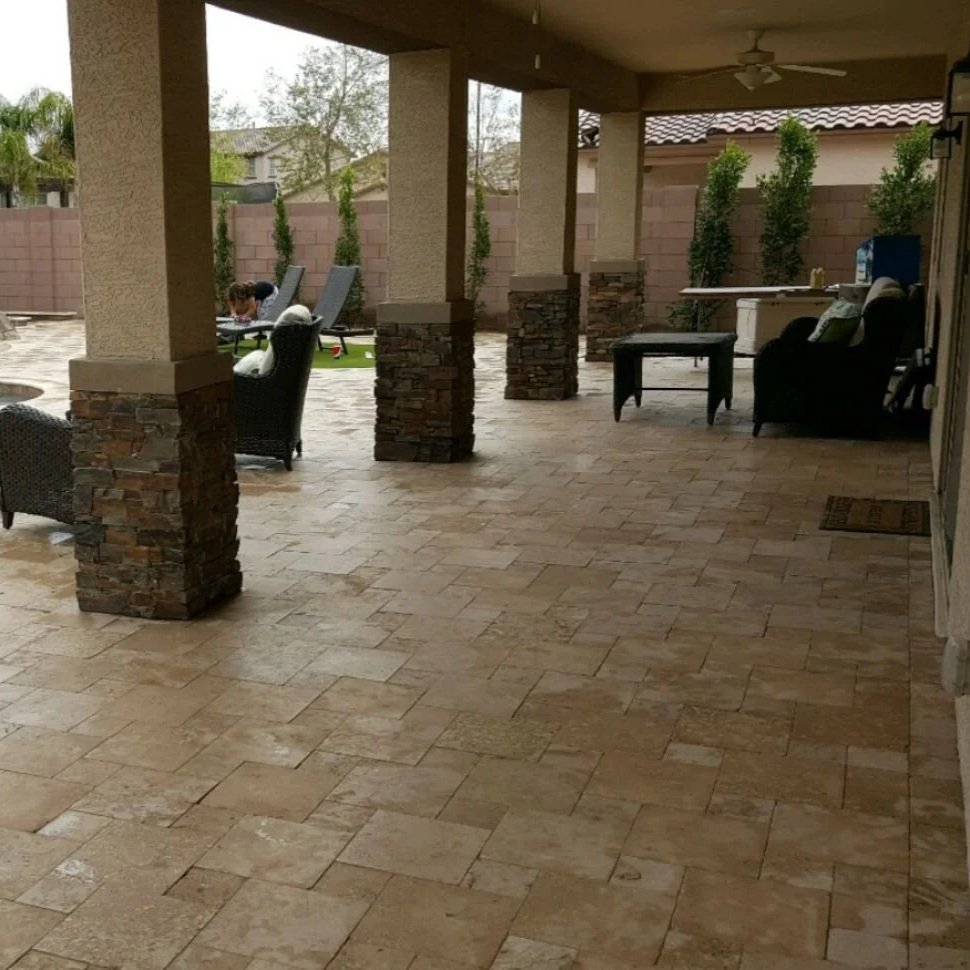
I cannot even set my drink down without watching it slide toward the low corner between those pavers.
Why does my patio feel like it is slowly collapsing every time someone walks across it? I cannot even set my drink down without watching it slide toward the low corner between those pavers.
Uneven pavers usually start as a small irritation, like a chair that rocks during dinner or a table that wobbles when friends come over. In Arizona, that annoyance quickly turns into standing water after a monsoon storm, tripping hazards for kids running barefoot, and the sinking feeling that you wasted money on a patio that was supposed to last. Many homeowners search for answers after that first obvious dip appears, wondering whether the ground is shifting, the installation was rushed, or desert conditions are quietly undoing the work.
The Ground Beneath Your Pavers Is Always Moving
Arizona soil looks dry and solid on the surface, but it behaves differently below grade. Desert soil expands and contracts based on moisture levels, even when rainfall is limited. Irrigation systems, heavy monsoon downpours, and even overwatering nearby landscaping introduce moisture that causes the soil to swell. When that moisture evaporates under intense heat, the soil contracts again. That cycle creates subtle voids and pressure changes beneath your pavers.
Over time, those shifts lead to uneven support. Pavers depend on a compacted base layer and stable subgrade to distribute weight evenly. When the soil beneath the base moves, the compacted material above can settle into low spots. Individual pavers then tilt or sink, creating edges that catch your shoe or lawn furniture leg. Homeowners often assume something dramatic must have happened, but gradual soil movement in Arizona is one of the most common reasons patio pavers lose their level surface.
Was My Paver Base Built To Handle Arizona Conditions?
Was my paver base done right in the first place? That is a question many homeowners ask once they notice dips or raised sections. Most people never see the base preparation process. They see the finished pavers, not the excavation depth, compaction method, or type of aggregate used underneath. Base preparation is not glamorous, but it determines whether your patio holds up for years or starts shifting after one monsoon season.
Shortcuts during installation are more common than people realize. Some contractors reduce excavation depth to save time and hauling costs. Others skip proper compaction between aggregate layers. In Arizona, where soil movement and moisture swings are part of the environment, those shortcuts show up quickly. A thinner base layer cannot evenly distribute weight, especially under heavy patio furniture, grills, or foot traffic. Once the base begins to settle unevenly, the pavers above follow that movement, and the surface becomes uneven.
The Mistake Of Thinking Pavers Are "Set It And Forget It"
A common homeowner belief is that pavers are completely maintenance-free. Many people choose pavers over poured concrete because they want flexibility and easier repair options. That assumption sometimes leads to ignoring small signs of movement until they become bigger issues. A slightly low corner, a tiny gap widening between pavers, or sand washing out after a storm often gets brushed off as normal aging.
In reality, pavers benefit from periodic inspection and minor adjustments. Joint sand plays a critical role in locking pavers together and distributing loads. In Arizona, wind, rain, and irrigation can gradually wash or blow that sand out. When joint sand thins, individual pavers lose lateral support and can begin to shift more easily. Replenishing joint sand and addressing minor settling early prevents larger sections from becoming uneven later. Ignoring those details allows small problems to compound, leading to widespread instability.
Why Do My Pavers Sink After It Rains?
Why do my pavers sink after it rains? That search phrase comes up frequently after Arizona's monsoon season. Heavy downpours can saturate the ground quickly, especially in areas where drainage was not carefully planned. Water that pools on or around the patio seeps into the base layers and underlying soil. As water drains away or evaporates, it can carry fine particles, leaving small voids behind.
Those voids create weak spots under the pavers. The next time someone walks across that area or sets down a heavy planter, the pavers compress into the empty space. Homeowners often think the rain directly damaged the pavers, but the real issue lies in how water was managed around the patio. Proper grading and drainage direct water away from the surface and prevent saturation beneath the pavers. Without that planning, repeated wetting and drying cycles lead to gradual settling.
The Role Of Edge Restraints In Keeping Pavers Level
Homeowners rarely discuss edge restraints, yet they play a major role in how well pavers hold their shape and level. Edge restraints are structural borders installed around the perimeter of a paver patio to prevent lateral movement. They keep the outer pavers from spreading outward under pressure. When those restraints are missing, poorly installed, or degrade over time, the entire patio can begin to shift outward.
As pavers spread, small gaps open along the edges. That outward movement reduces the tight interlock between individual pavers. Once the interlock weakens, vertical movement becomes more likely. In Arizona, where temperature swings and soil shifts add stress to outdoor surfaces, compromised edge restraints accelerate uneven settling. Homeowners often focus on the center of the patio where the dip is visible, but the issue sometimes starts at the perimeter where support has quietly failed.
Cheap Base Materials Versus Proper Aggregate
Another factor influencing long-term performance is the quality of the base materials beneath the pavers. A proper aggregate base consists of crushed stone that compacts tightly and allows for drainage. Some installers use cheaper, less stable materials that are easier to spread but do not compact as effectively. Those materials may hold up for a short time but begin to break down under repeated loading and moisture changes.
In Arizona, durability matters because patios endure extreme heat, intense sun, and occasional heavy rainfall. Base materials that degrade or shift more easily create uneven support beneath the pavers. Homeowners may not realize that cost-cutting at the base layer can lead to visible problems within a few years. Investing in proper aggregate and compaction techniques reduces the risk of widespread settling and extends the patio's functional life.
Tree Roots And Hidden Pressure Points
Tree roots are another overlooked cause of uneven pavers. Many Arizona homeowners plant shade trees near patios to reduce heat exposure. Over time, roots expand outward and upward in search of moisture. When those roots grow beneath a paver patio, they exert upward pressure on the base and pavers above. Raised sections may appear gradually, creating tripping hazards or visible ridges.
Roots can also disrupt the base layer by displacing compacted aggregate. Even if the initial installation was done correctly, organic growth beneath the patio can alter the support structure. Removing a tree does not always immediately solve the problem, because the disturbed soil may remain unstable for some time. Identifying root-related movement early allows for targeted repair rather than replacing the entire patio surface.
Why Are My Pavers Uneven In Just One Spot?
Why are my pavers uneven in just one spot? Localized settling often points to a specific issue rather than a systemic failure. Common causes include a plumbing leak beneath the patio, concentrated irrigation runoff, or a previously filled trench from utility work. Any area where soil was disturbed and not compacted properly is more prone to settling later.
Arizona homes sometimes have irrigation lines running near or under patios. A slow leak may not be visible on the surface but can saturate soil beneath the pavers over time. That moisture weakens the subgrade, allowing pavers to sink gradually. Identifying and correcting the source of excess moisture is critical before lifting and releveling the affected pavers. Without addressing the underlying cause, the problem often returns.
Seasonal Stress And Expanding Hardscape
Arizona's climate introduces seasonal stress that affects all outdoor hardscape, including pavers. Summer heat causes materials to expand, while cooler winter nights allow them to contract. Although pavers are designed to withstand temperature changes, repeated expansion and contraction cycles can affect joint sand stability and base performance. Over the years, that stress contributes to subtle movement.
Monsoon season adds another layer of impact. Intense rainfall over short periods tests drainage design and compaction quality. Patios installed just before monsoon season sometimes reveal weaknesses quickly if base layers were not adequately prepared. Homeowners who notice movement after seasonal changes often see the cumulative effect of temperature swings, moisture shifts, and load stress.
The Frustration Of A Patio That No Longer Feels Safe
An uneven patio creates more than visual disappointment. Safety becomes a real concern, especially for families with children or older adults. A single raised edge can catch a toe and cause a fall. Outdoor gatherings become less relaxing when guests comment on wobbling chairs or uneven tables. That daily inconvenience erodes the enjoyment that the patio was meant to provide.
Many homeowners in Arizona invest in pavers to create an outdoor living space that feels like an extension of the home. When that space becomes uneven, it feels like wasted square footage. Some people avoid certain areas of the patio entirely, limiting how they use the yard. Addressing leveling issues restores not just the surface but also the comfort and confidence that the space should provide.
FAQs
Why do patio pavers sink over time in Arizona?
Patio pavers sink over time primarily because of soil movement, moisture changes, and base layer settling. Arizona soil expands and contracts with irrigation and monsoon rains, creating voids beneath pavers. If the base is not compacted adequately or drainage is poor, this leads to uneven settling.
Can uneven pavers be fixed without replacing the whole patio?
Uneven pavers can often be lifted, the base reworked, and the pavers reset without replacing the entire patio. Targeted repairs effectively address localized settling or drainage issues. Correcting the underlying cause before resetting the pavers helps prevent the same area from sinking again.
Does heavy patio furniture cause pavers to become uneven?
Heavy patio furniture can contribute to settling if the base beneath the pavers is not properly compacted. Concentrated weight in one area increases pressure on the base and underlying soil. A well-prepared base should distribute weight evenly and reduce the risk of localized sinking.
How often should paver patios be inspected for leveling issues?
Paver patios should be visually inspected at least once, and preferably twice, a year, especially after the monsoon season. Checking for low spots, loose joint sand, and shifting edges allows small issues to be addressed early. Regular inspection helps maintain a safe and level surface over time.
North Valley Stone Supply LLC is a family-owned and operated hardscape materials company serving Phoenix and surrounding areas. We strive to bring our customers natural stone and quality materials at affordable prices. Whether you need stacked stones, pavers, or swimming pool tiles, we aim to provide our customers with top quality products at reasonable prices. Call us today.